



























Oil Shock Jolts Global Markets, Sending Investors Toward Safe-Haven Assets
Oil price surge triggers global market volatility as investors shift to safe-haven assets amid rising geopolitical tensions and energy supply fears.

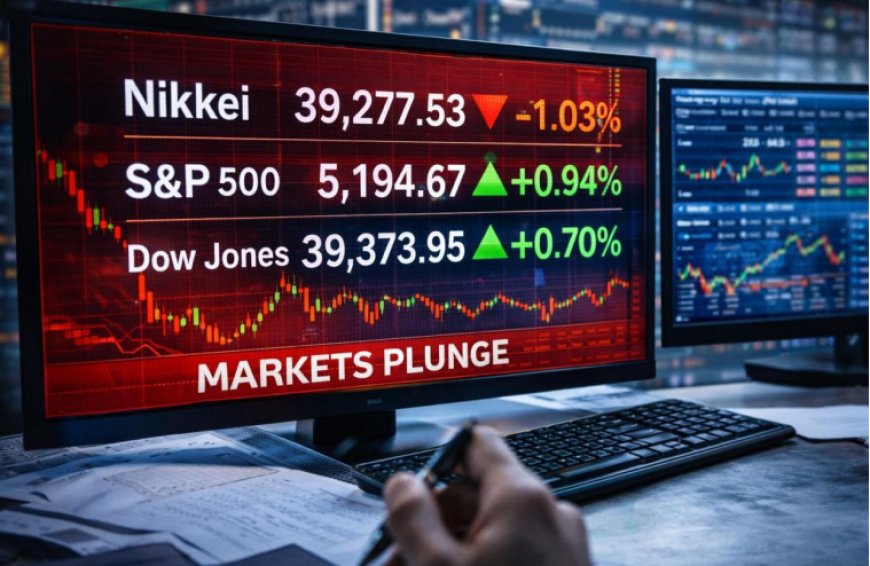
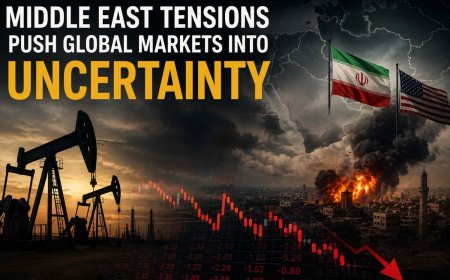
Global financial markets have entered a phase of acute volatility as escalating geopolitical tensions in the Middle East trigger sharp reactions across equities, commodities, and currencies. Within the past 12 hours, major Asian indices including Japan’s Nikkei and South Korea’s KOSPI recorded notable declines, reflecting heightened investor anxiety and a rapid reassessment of global economic risk.
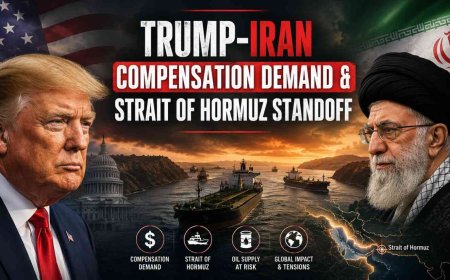
The immediate catalyst behind this turbulence is the surge in oil prices, driven by fears of prolonged conflict and disruption to critical energy supply routes such as the Strait of Hormuz. Brent crude has climbed above $116 per barrel, marking one of the strongest monthly rallies on record and intensifying concerns about inflation, supply chains, and global growth.
In response to these developments, investors are shifting capital toward traditional safe-haven assets, particularly the U.S. dollar, while policymakers prepare coordinated action. A virtual meeting of G7 nations is now being organized to address the growing energy crisis and its potential spillover into the global economy, underscoring the seriousness of the situation.
Market Sell-Off and Investor Reaction
Equity markets across Asia witnessed sharp declines as geopolitical uncertainty intensified. Japan’s Nikkei index fell by approximately 2.8%, while South Korea’s KOSPI dropped nearly 3%, reflecting widespread sell-offs across energy-sensitive and export-driven sectors.
In broader trading, losses were even steeper at points during the session, with reports indicating intraday declines of up to 4–5% in some indices before partial recovery. This volatility highlights the fragility of investor sentiment and the speed at which geopolitical developments are being priced into markets.
The sell-off is not confined to Asia alone. U.S. futures have also weakened, and global investors are increasingly reducing exposure to riskier assets. This shift reflects a classic “risk-off” environment, where capital moves away from equities toward safer instruments amid uncertainty.
Oil Shock and Energy Market Disruption
At the center of the current financial turmoil lies a dramatic surge in energy prices. Brent crude has risen above $116 per barrel, driven by fears of supply disruptions linked to the ongoing conflict and threats to critical infrastructure.
The Strait of Hormuz, through which roughly 20% of global oil supply passes, remains under significant threat, amplifying concerns of a prolonged supply shock. Any sustained disruption could lead to severe shortages, particularly for energy-importing economies in Asia and Europe.
Analysts warn that continued escalation could push oil prices even higher, potentially reaching $150 per barrel in worst-case scenarios. Such a spike would have far-reaching consequences, including increased transportation costs, higher inflation, and reduced consumer spending globally.
Shift Toward Safe-Haven Assets
Amid growing uncertainty, investors are increasingly reallocating capital toward safe-haven assets. The U.S. dollar has strengthened significantly, recording one of its strongest monthly gains in recent periods as demand for stability rises.
Traditionally, assets such as gold and government bonds also benefit during such periods of volatility. While market dynamics remain fluid, the broader trend indicates a clear move away from equities and toward assets perceived as more secure in times of geopolitical and economic stress.
This shift reflects deeper concerns about the global economic outlook. Rising energy prices, combined with geopolitical uncertainty, are increasing the likelihood of stagflation—a scenario characterized by high inflation and low growth—forcing investors to adopt more defensive strategies.
Policy Response and G7 Coordination
Recognizing the scale of the crisis, global policymakers are moving toward coordinated action. A virtual meeting of G7 nations is being prepared to address the energy shock and its broader economic implications, including inflationary pressures and supply chain disruptions.
Leaders from major economies are expected to discuss potential measures such as strategic oil reserve releases, energy market stabilization, and accelerated transition toward alternative energy sources. These steps aim to mitigate immediate risks while addressing long-term vulnerabilities exposed by the crisis.
In parallel, central banks are closely monitoring the situation. The surge in oil prices complicates monetary policy decisions, as authorities must balance inflation control with the need to support economic growth. This dual challenge underscores the complexity of the current global economic environment.
Outlook
The sharp decline in global equity markets, coupled with surging oil prices and a flight to safe-haven assets, signals the emergence of a significant economic stress event. While markets have historically shown resilience, the current combination of geopolitical conflict and energy disruption presents a uniquely complex challenge.
In the near term, volatility is likely to persist as investors respond to evolving developments in the Middle East and await clarity from policymakers. The outcome of the upcoming G7 discussions will play a critical role in shaping market expectations and restoring confidence.
Looking ahead, the situation underscores a broader structural reality: global markets remain deeply interconnected with geopolitical events and energy security. As the crisis unfolds, its trajectory will not only determine short-term market movements but also influence long-term economic stability and policy direction worldwide.