

























Unilever and McCormick to Form a Massive $60 Billion Food Business Merger
Unilever and McCormick merge food businesses in $60B deal to expand global reach, boost efficiency, and reshape competition in the industry

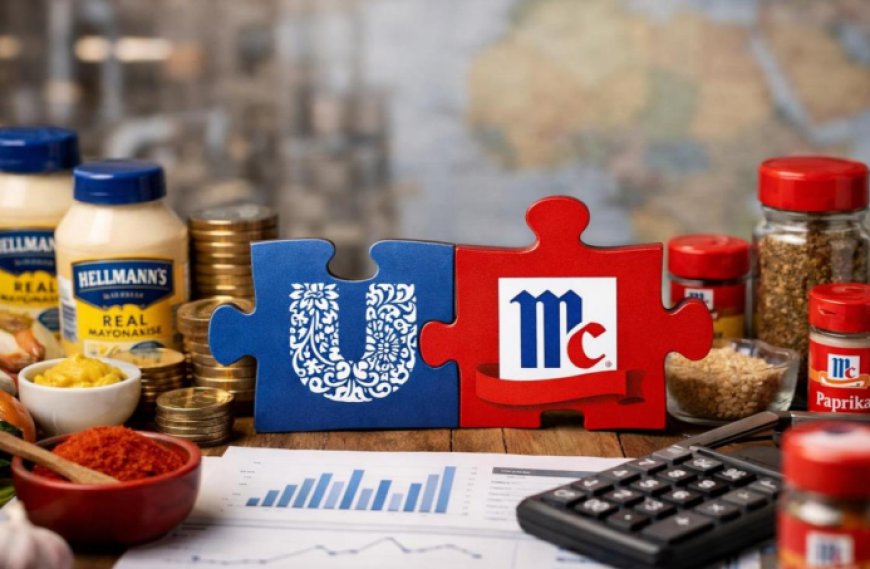
A landmark consolidation is underway in the global consumer goods sector as Unilever and McCormick & Company move to combine their food businesses in a deal expected to create a company valued at up to $60 billion. This transaction marks one of the largest recent mergers in the packaged food industry, reflecting a broader trend of consolidation amid changing consumer preferences, inflationary pressures, and competitive dynamics.
The deal involves the separation of Unilever’s food division which includes globally recognized brands such as Knorr and Hellmann’s and its merger with U.S.-based spice and flavor giant McCormick. The combined entity is expected to significantly expand its global footprint, creating a diversified portfolio across condiments, seasonings, and packaged food products.
This strategic move signals a turning point for both companies. While McCormick strengthens its position as a dominant global player in flavor and food categories, Unilever continues its broader transformation strategy, shifting focus toward higher-growth segments such as beauty, personal care, and home products.
Structure and Financial Details of the Deal
The merger is structured as a cash-and-stock transaction valued at approximately $44.8 billion for Unilever’s food business, forming the foundation of a larger combined entity approaching $60 billion in value. This makes it one of the most significant deals in the consumer goods sector in recent years.
Under the terms of the agreement, McCormick will contribute both cash and equity, including around $15.7 billion in cash and $29.1 billion in shares, resulting in a combined ownership structure where Unilever and its shareholders retain a majority stake. The new entity is expected to operate under the McCormick name while maintaining a global presence across key markets.
The transaction is also designed to generate significant synergies, with estimates suggesting annual cost savings of around $600 million within three years. These efficiencies are expected to arise from supply chain integration, procurement optimization, and operational consolidation.
Strategic Rationale Behind the Merger
The merger reflects a clear strategic alignment between the two companies. For McCormick, the deal represents a transformational expansion, allowing it to integrate globally recognized brands into its portfolio and strengthen its position in the competitive food and flavor market.
Unilever, on the other hand, is pursuing a deliberate shift away from slower-growing food segments. The company has been actively restructuring its portfolio, including the spin-off of its ice cream business and divestment of select food brands, as part of a broader strategy to focus on higher-margin and faster-growing categories.
Industry analysts view this move as part of a wider trend in which companies are simplifying operations and concentrating on core strengths. By separating its food division, Unilever aims to unlock value for shareholders while enabling the new combined entity to operate with greater strategic focus.
Market Impact and Competitive Landscape
The formation of a $60 billion food giant is expected to reshape the competitive dynamics of the global packaged food industry. The combined entity will bring together a wide range of leading brands, creating a diversified portfolio that spans condiments, sauces, seasonings, and ready-to-eat products.
This scale provides significant advantages in terms of distribution, marketing, and innovation. The merged company will be better positioned to compete with major global players such as Nestlé and Kraft Heinz, particularly in emerging markets where demand for packaged food is growing rapidly.
Financial markets have responded with cautious optimism. While the deal is seen as strategically sound, investors are closely monitoring execution risks, including integration challenges and regulatory approvals. Share price movements following the announcement have reflected a mix of confidence and caution.
Global Industry Trends and Economic Context
The Unilever–McCormick deal is emblematic of a broader wave of consolidation in the global consumer goods sector. Companies are increasingly turning to mergers and acquisitions as a way to navigate rising costs, supply chain disruptions, and evolving consumer preferences.
Inflationary pressures and shifting demand patterns have forced companies to rethink their strategies. Consumers are becoming more price-sensitive, while retailers are exerting greater pressure on margins. In this environment, scale and efficiency have become critical competitive advantages.
Additionally, the rise of private labels and regional brands has intensified competition, prompting established players to strengthen their portfolios through strategic partnerships and acquisitions. The Unilever–McCormick merger reflects this need to adapt to a rapidly changing market landscape.
Outlook
The proposed merger between Unilever and McCormick represents a defining moment in the evolution of the global food industry. By combining their respective strengths, the two companies are creating a powerful entity capable of competing on a global scale while delivering enhanced value to consumers and shareholders.
In the near term, the focus will be on regulatory approvals, integration planning, and execution. The success of the deal will depend on how effectively the companies can realize synergies and manage the complexities of merging large-scale operations across multiple markets.
Looking ahead, the transaction is likely to accelerate further consolidation in the industry, as competitors respond to the emergence of a new global leader. As the food sector continues to evolve, strategic partnerships of this scale will play a crucial role in shaping its future trajectory.