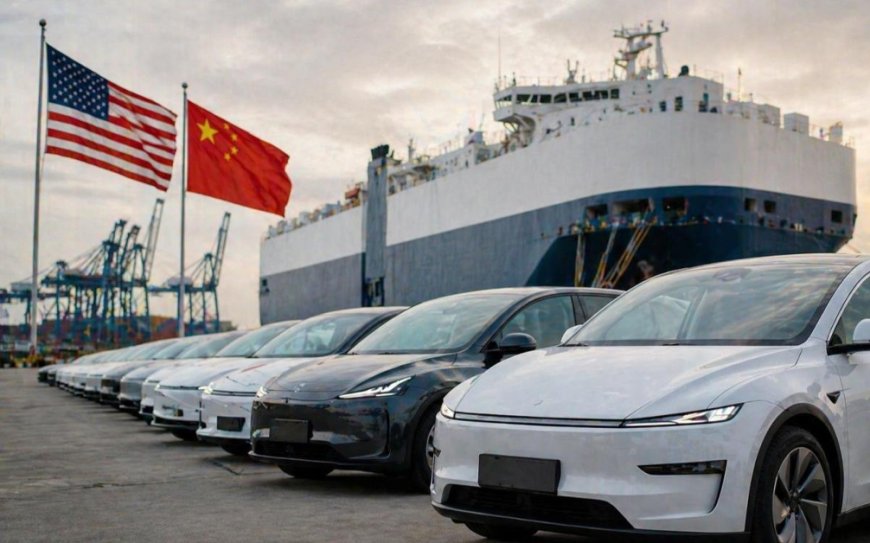
A renewed wave of protectionist and security-driven policymaking is emerging in the United States as more than 70 lawmakers have urged the government to maintain—and potentially expand—a ban on Chinese automakers entering the U.S. market. The move reflects growing bipartisan concern over national security risks, data privacy issues, and the long-term competitiveness of the American automotive industry.
According to recent reports, the appeal—led by prominent lawmakers including Debbie Dingell and Ro Khanna—calls on the administration to block Chinese car companies from manufacturing or selling vehicles in the United States. The lawmakers argue that allowing such access would pose a “direct threat” to American manufacturing, workers, and national security.
The push comes at a time when Chinese automakers are rapidly expanding their global footprint, leveraging advanced electric vehicle (EV) technology, competitive pricing, and strong government support. However, despite their global rise, Chinese carmakers remain largely absent from the U.S. market due to regulatory barriers and political opposition—conditions that lawmakers are now determined to preserve.
Policy Background and Legislative Push
The current effort to maintain the ban builds on earlier regulatory actions introduced in 2025, which effectively restricted Chinese vehicles and related technology from entering U.S. markets. These rules focused particularly on connected vehicle software and hardware, citing risks related to data collection and potential surveillance.
Lawmakers are now pushing to formalize and expand these restrictions through new legislation. Senator Bernie Moreno, among others, has indicated plans to introduce bills aimed at completely blocking Chinese automotive presence in the United States.
In addition to banning direct imports, lawmakers are also targeting indirect entry routes. Proposals include preventing Chinese vehicles assembled in Mexico or Canada from entering the U.S. under existing trade agreements. This reflects a broader strategy to close loopholes and ensure that restrictions are comprehensive and enforceable.
National Security Concerns and Data Risks
A central argument driving the proposed ban is the perceived national security risk associated with modern vehicles. Lawmakers and security experts have raised concerns that connected cars—equipped with sensors, cameras, and data systems—could potentially collect sensitive information and transmit it to foreign entities.
These concerns are particularly acute in the context of Chinese automakers, given the close ties between Chinese companies and the state. U.S. officials argue that such connections could enable data access or remote control capabilities, posing risks to infrastructure and personal privacy.
The White House has echoed these concerns, emphasizing that national security considerations will take precedence over economic opportunities. As one official noted, the U.S. will not compromise security in exchange for foreign investment or industrial collaboration.
Economic Competition and Industry Impact
Beyond security concerns, the push to maintain the ban is also driven by fears of economic disruption. Chinese automakers have become increasingly competitive in global markets, offering technologically advanced vehicles at significantly lower prices than many Western counterparts.
Lawmakers and industry groups argue that allowing Chinese companies into the U.S. market could undermine domestic manufacturers, leading to job losses and reduced investment in American production. Major automakers and trade associations have largely supported the restrictions, viewing them as necessary to protect the domestic industry.
At the same time, Chinese firms are gaining market share globally, particularly in the electric vehicle segment. Companies like BYD have already surpassed established players in sales volume, highlighting the competitive challenge posed by China’s automotive sector.
Geopolitical Context and Trade Tensions
The debate over Chinese automakers is taking place within a broader context of rising U.S.–China tensions. Trade disputes, technology competition, and geopolitical rivalry have all contributed to a more confrontational relationship between the two countries.
The automotive sector has become a key battleground in this rivalry, with both nations seeking to assert dominance in next-generation technologies such as electric vehicles and autonomous driving systems. The U.S. push to restrict Chinese cars is part of a wider effort to limit China’s influence in critical industries.
Upcoming diplomatic engagements, including potential summits between U.S. and Chinese leaders, add another layer of complexity. While economic cooperation remains a possibility, the automotive issue highlights the deep divisions that persist between the two powers.
Conclusion
The call by U.S. lawmakers to maintain and strengthen the ban on Chinese automakers marks a significant moment in the evolving relationship between economic policy and national security. It reflects a growing recognition that technological advancements in industries like automotive are intertwined with broader strategic concerns.
Looking ahead, the outcome of this policy push will have far-reaching implications. A continued ban could protect domestic industries and address security concerns, but it may also limit consumer choice and intensify trade tensions with China.
Ultimately, the situation underscores a broader shift in global economic policy, where governments are increasingly prioritizing security and strategic autonomy over free-market principles. As the automotive industry continues to evolve, the decisions made today will shape the competitive landscape for years to come.