


























WHO Releases Updated Global Guidelines to Strengthen Pandemic Preparedness
WHO updates global pandemic preparedness guidelines, focusing on early detection, equitable vaccine production and coordinated international response systems.

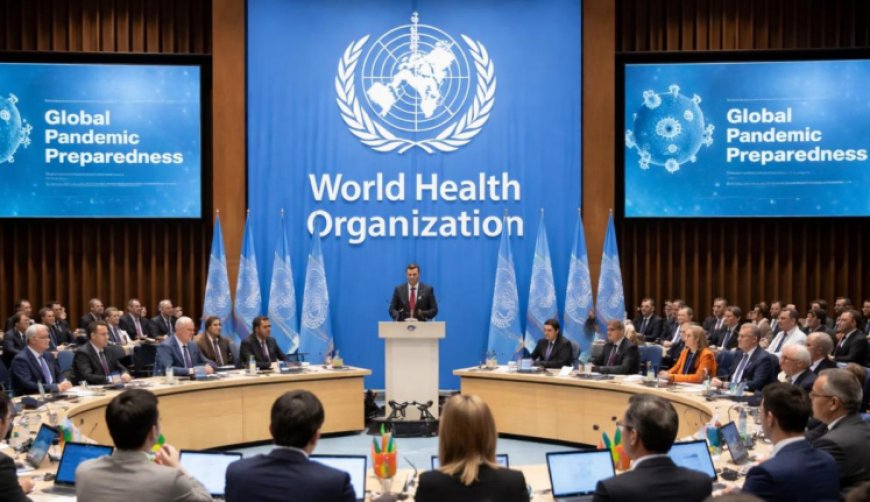
The World Health Organisation has released a newly updated global framework for pandemic preparedness aimed at guiding member nations in preventing, detecting and responding to future infectious-disease threats.
The revised guidance, published today following a high-level technical consultation held on February 2, 2026, focuses heavily on early-warning surveillance, equitable vaccine manufacturing, and coordinated international response systems—areas identified as crucial vulnerabilities during the last major global health crises.
Senior WHO officials emphasised that the updated framework reflects lessons learned from the COVID-19 pandemic, recent regional outbreaks and growing scientific evidence that future health emergencies may arise with increased frequency. According to WHO’s health-risk modelling division, the probability of a high-impact infectious disease emerging in the next decade has risen due to climate pressures, accelerated urbanisation, global mobility and zoonotic spillover patterns.
The organisation stressed that preparedness must now be treated as a core component of national security, economic stability and global public health strategy.
Strengthening Global Early-Warning Systems
WHO’s revised guidelines place unprecedented importance on the establishment of early detection systems capable of rapidly identifying outbreaks before they escalate into global emergencies.
Member states have been urged to expand genomic sequencing networks, integrate real-time data collection into national health-information systems and strengthen laboratory capacities that can support rapid pathogen identification.
The WHO Director-General stated at the briefing that “early detection remains the single most decisive factor in preventing global spread.” He noted that during previous health emergencies, delays in surveillance reporting often caused the loss of valuable response time that could have reduced human and economic impact.
The new framework encourages nations to adopt interoperable digital surveillance tools and share high-quality data across borders within hours rather than days.
Global health analysts reported that the WHO is also developing a tiered alert system designed to streamline international communication and ensure that emerging threats trigger coordinated responses at earlier stages.
The organisation’s technical committee highlighted that improved detection capacity can reduce the economic cost of outbreaks by as much as 60 percent, based on historical evaluation models.
Expanding Vaccine Production Capacity Worldwide
Another major focus of the 2026 framework is the push for equitable vaccine access. WHO officials reiterated that disparities in vaccine distribution during past outbreaks left lower-income countries particularly vulnerable, prolonging global transmission cycles and increasing fatality rates.
The new guidance recommends large-scale investment in regional vaccine-manufacturing capabilities across Asia, Africa, the Middle East and Latin America to ensure timely and affordable access for all populations.
The WHO announced it will expand its support for regional vaccine-technology transfer hubs and emphasised cooperation with local regulatory authorities to expedite approvals during emergencies.
Several nations have already signalled interest in joining WHO’s accelerated vaccine-production initiative for 2026–2028, which aims to establish at least 20 new regionalised manufacturing nodes worldwide.
Health-policy experts highlighted that equitable vaccine access is essential not only for humanitarian reasons but also for global economic protection. WHO’s economic impact assessment estimates that unequal vaccine availability contributed to trillions of dollars in cumulative global economic losses during the previous decade’s outbreaks.
Building a Unified International Response Framework
The updated framework calls for deeper international cooperation through shared emergency logistics, cross-border medical teams and unified communication channels during global health events.
WHO officials stated that more than 140 countries participated in the consultation that shaped the new response blueprint, which includes commitments to structured pandemic simulations, improved emergency communication protocols and streamlined deployment mechanisms for medical resources.
A senior advisor from the WHO Health Emergencies Programme remarked that “global readiness cannot depend on isolated national responses” and stressed that coordinated international action significantly reduces both mortality rates and long-term socioeconomic disruption.
The framework proposes enhanced deployment timelines for international rapid-response units and medical supply chains, with an aim to mobilise critical resources within 72 hours of WHO declaring a health emergency of international concern.
The organisation also emphasised the importance of sustained investment in public-health infrastructure, warning that preparedness funding historically declines once outbreaks subside—a pattern it says must change to avoid systemic vulnerabilities.
Global Policy Impact and Government Reactions
Initial reactions from governments, health ministries and public-health organisations indicate broad support for the new framework. Several European and Asian nations signalled plans to integrate the updated guidelines into national health strategies by mid-2026.
Public-health institutions welcomed the renewed emphasis on early surveillance and vaccine equality, while economic analysts noted that preparedness planning is increasingly being treated as part of national economic resilience frameworks.
International development organisations expressed confidence that the updated WHO guidance could improve global coordination in future crises, while also emphasising the need for political will, sustained funding and cross-sector partnerships.
WHO officials concluded the briefing by stating that the next 12 months will focus on capacity-building initiatives, cross-border readiness evaluations and country-level technical training programmes.
Conclusion
WHO’s updated global pandemic-preparedness framework marks a major step in strengthening international public-health security.
By placing strategic emphasis on early detection, equitable vaccine manufacturing and coordinated global responses, the organisation aims to equip nations with robust tools to manage emerging health threats more effectively.
As countries begin integrating these revised guidelines, global health specialists foresee a more unified preparedness landscape where scientific data, technology infrastructure and international cooperation drive early response capability.
The success of the framework will depend on sustained implementation and collaborative investment from governments worldwide, making 2026 a defining year for global public-health readiness.