

































SpaceX Delays Starship Test Flight Following Pre-Launch System Irregularity
SpaceX postpones a critical Starship test flight after detecting a sensor anomaly during final checks, triggering detailed technical reviews and safety assessments.

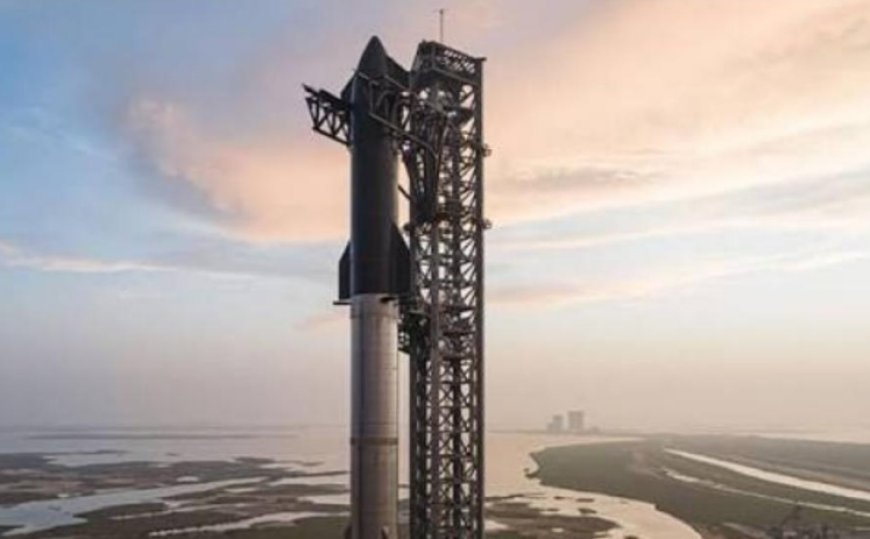
Space exploration efforts faced a significant pause today as SpaceX delayed its next Starship test flight after engineers detected a critical sensor anomaly during final pre-launch checks at the company’s Starbase facility in Texas. The scheduled test, expected to be one of the most important Starship flights to date, was called off less than two hours before ignition after telemetry teams identified inconsistent readings in the vehicle’s upper-stage propulsion monitoring system.
Officials stated that the anomaly was detected in a sensor embedded near the methane-fuel feed lines of the Raptor engines, which form the core of Starship’s high-thrust propulsion architecture. While the issue was not classified as an emergency fault, engineers determined that launching with an unresolved anomaly could compromise stability during ascent, prompting an immediate halt to operations. The postponement underscores the rigorous testing standards applied to SpaceX’s fully reusable launch system, which forms the backbone of upcoming lunar and interplanetary missions.
Technical Review Underway After Abort Decision
Following the decision to stand down operations, SpaceX initiated a detailed diagnostic review of the affected engine subsystem. Early statements from flight-test coordinators indicate that the anomaly involved irregular thermal and pressure readings that did not align with expected pre-flight values. According to internal data, the discrepancy appeared shortly after ignition-sequence simulations were initiated, highlighting an automated safeguard algorithm designed to detect deviations in real time.
Engineers are now conducting a disassembly and internal inspection of the affected sensor cluster. The flight team confirmed that the anomaly was isolated to the upper stage and did not involve the booster segment, which contains 33 Raptor engines. Technical specialists familiar with the programme noted that modern launch systems rely heavily on redundancy protocols, and even minor discrepancies—including sensor drift or abnormal thermal signatures—are treated as critical at this stage of development.
SpaceX representatives indicated that replacement tests and recalibration procedures will follow, with additional cold-flow and pressure-cycle trials expected before a new launch date is announced. The review process is consistent with the company’s safety-first approach, particularly given Starship’s ambitious role in future lunar, Martian and deep-space missions under both commercial and government contracts.
Mission Objectives and Importance
The postponed test flight was expected to validate multiple mission parameters essential for Starship’s long-term operational readiness. These include structural stability during max-Q, upper-stage ignition sequencing, refined re-entry burn controls and updated heat-shield durability measurements. This test would also have been a precursor to future cargo-orbit missions planned in the second half of 2026.
Industry analysts emphasised that the delay, although unexpected, reflects the complexity of building the world’s most powerful launch vehicle. The Starship system, standing nearly 120 metres tall, has undergone major iterative design changes since its last successful flight and remains central to NASA’s Artemis programme timelines, which depend on Starship for lunar lander deployment and fuel-depot missions.
The flight was additionally expected to demonstrate improved atmospheric re-entry control following several earlier test flights that saw rapid unscheduled disassemblies or heat-shield degradation upon descent. SpaceX officials reiterated that iterative development remains at the core of the programme’s philosophy, with each test designed to generate crucial data for incremental improvement.
Statements from SpaceX and Industry Reactions
SpaceX confirmed the postponement in an official communication released shortly after the scrub, stating that “safety and data integrity remain the primary considerations in all Starship operations.” Chief engineers noted that sensor anomalies, while common during early development phases, must be fully characterised before the next test window to avoid unanticipated risk during ascent or staging.
Independent aerospace analysts argue that the delay may slightly shift the company’s internal timeline for mid-2026 demonstration missions but does not indicate a major setback for the programme. Experts highlight that aerospace testing cycles—especially for vehicles designed for full reusability—naturally involve complex diagnostics and adjustments.
Industry response remained largely positive, with several agencies commending SpaceX for prioritising safety and technical accuracy. Former mission planners associated with earlier NASA programmes noted that even legacy vehicles such as the Space Shuttle underwent extensive delay cycles during development, emphasising that cautious review is inherent to all leading-edge aerospace engineering.
The Road Ahead
A new launch date will be announced after engineers complete diagnostics on the propulsion sensor systems. SpaceX has indicated that internal recalibration and subsystem testing could take several days, but the timeline may extend depending on component-level analysis. The company is expected to conduct a full propellant-loading simulation and new engine qualification runs before approving another launch attempt.
Mission planners also suggested that once the anomaly is resolved, the next flight could incorporate additional test parameters due to the accumulated preparation period. These potential adjustments may include expanded telemetry tracking, longer-duration upper-stage burns and extended descent control experiments.
Analysts expect the revised launch schedule to be aligned closely with broader mission sequencing for the year, particularly as SpaceX continues to coordinate Starship development with commercial satellite operators and government-backed lunar initiatives. The next several weeks will therefore be pivotal in shaping the vehicle’s development trajectory for the remainder of 2026.
Conclusion
The delay of the Starship flight underscores the technical challenges of developing the world’s most ambitious reusable spacecraft. While the scrubbed launch represents a pause in the programme’s rapid testing cycle, it reflects a commitment to engineering precision, structural verification and mission safety.
As SpaceX engineers work to isolate and correct the sensor anomaly, global attention remains firmly on the next test window. The outcome of these diagnostics will influence the pace of future Starship missions, including orbital cargo flights and NASA-aligned lunar timelines, making this review cycle one of the most consequential in the programme’s current phase.