































U.S. Tariffs and Meta Chip Deal Shake Global Markets
New 10% U.S. tariffs and Meta’s $60B AMD chip deal trigger global market volatility, reshaping supply chains, AI competition and trade policy.

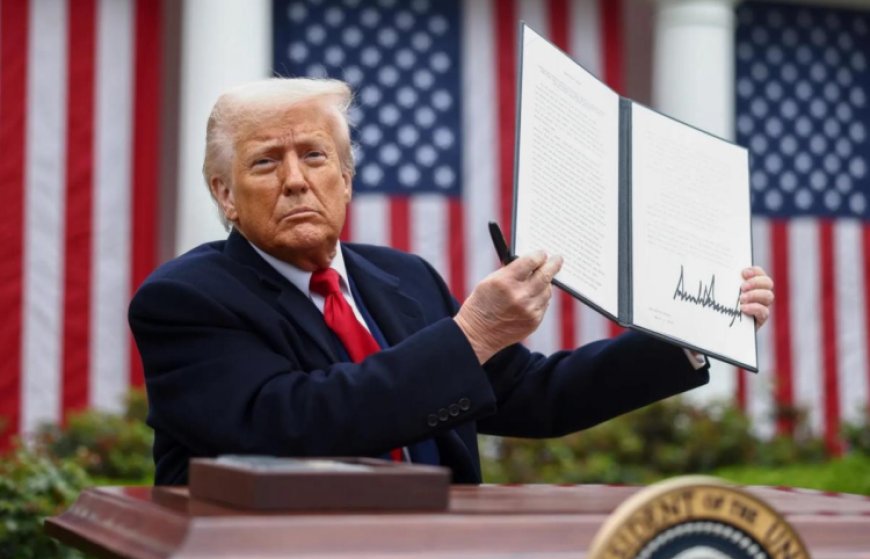
The global economy entered a new phase of volatility as the United States implemented a 10% blanket tariff on a wide array of imported goods, marking one of the most sweeping trade interventions in recent years. The tariff order, signed by President Donald Trump, took effect immediately and has already begun to rattle global supply chains, particularly among major U.S. trading partners in Asia and Europe. Senior White House officials framed the decision as a long-term strategy to reduce dependence on foreign manufacturing, revive American industry and rebalance trade deficits.
Compounding market uncertainty, Meta Platforms Inc. announced a landmark USD 60-billion semiconductor supply partnership with Advanced Micro Devices (AMD), a move that signals a fundamental restructuring of the global AI hardware ecosystem. The deal positions AMD as a central player in the world’s rapidly expanding AI infrastructure race and reduces Meta’s historical reliance on single-source chip suppliers. Taken together, the tariff shock and the chip-industry realignment have triggered sharp fluctuations in equities, currency markets and technology indices, marking a defining moment for global economic policy and innovation.
Tariff Shockwave Hits Global Trade Partners
The implementation of the new U.S. tariffs marks one of the broadest measures imposed by the Trump administration since its first term. Unlike earlier sector-specific duties, the new 10% levy applies widely across industrial machinery, electronics, consumer goods, automotive components and intermediate manufacturing inputs. U.S. Treasury officials argued that this across-the-board structure prevents companies from relocating supply chains superficially to bypass country-specific tariffs.
Early responses from impacted nations have been swift. Officials from Japan, South Korea and Germany expressed “deep concern” over the policy’s potential to disrupt bilateral trade and undermine multilateral mechanisms. Economists note that the policy may raise production costs for American manufacturers reliant on imported components, especially in transport equipment, renewable-energy hardware and consumer electronics. The National Association of Manufacturers (NAM) warned that several industries may face “short-term price pressures and operational strain” as companies reassess supply-chain dependencies.
Financial markets reacted with sharp swings. The S&P 500 briefly declined amid fears of retaliatory tariffs from major economies, while the dollar strengthened against emerging-market currencies. Analysts from multiple Wall Street firms said the next 10 days would be “crucial” in determining whether trading partners adopt countermeasures or choose negotiation channels to mitigate impact.
Global Supply Chains Brace for Realignment
The tariff rollout is expected to accelerate an ongoing global trend toward supply-chain relocation, with several multinational firms already evaluating alternatives in Southeast Asia, India and Mexico. Logistics specialists note that the tariff’s uniformity removes ambiguity, forcing companies to rethink long-term sourcing models rather than relying on incremental adjustments. This could reshape manufacturing geographies across Asia, where nations like Vietnam, India and Indonesia are likely to see increased interest from global companies seeking tariff-neutral production bases.
Meanwhile, corporate leaders expressed mixed sentiments. Several top American retailers warned of potential consumer-price inflation, while U.S. industrial manufacturers said the tariffs could stimulate domestic investment, if complemented by federal incentives. A senior executive of a major automotive supplier disclosed that their company has already convened an emergency task force to assess alternative sourcing for high-volume parts currently imported from East Asia, noting that “production decisions made in the next quarter may determine competitiveness for years.”
Meta’s USD 60-Billion Chip Deal Redraws AI Hardware Landscape
In an unexpected but consequential move, Meta unveiled a USD 60-billion multi-year agreement with AMD, marking one of the largest semiconductor procurement deals in the history of the AI industry. The agreement covers next-generation GPU accelerators, custom AI processors optimized for Meta’s large-scale language models and an exclusive R&D collaboration on advanced inference chips. AMD CEO Lisa Su called the partnership “a transformative step in global AI compute leadership” and said the companies would jointly accelerate breakthroughs in scaling AI workloads.
For Meta, led by CEO Mark Zuckerberg, the deal represents a decisive pivot away from over-reliance on Nvidia’s high-performance chips. In an internal briefing, Zuckerberg said the expanded collaboration ensures “greater supply resilience, better cost control and deeper architectural integration” for Meta’s massive AI compute clusters powering Meta AI, WhatsApp generative features and Horizon metaverse infrastructure.
Stock markets reacted sharply. AMD shares surged, reflecting investor optimism that the chipmaker was gaining critical ground in the competitive AI accelerator market. Nvidia, while still dominant, saw a temporary dip as traders reassessed future competitive dynamics. Analysts project that Meta’s multi-vendor strategy may become standard practice among global cloud and AI firms seeking to avoid concentration risk.
Tech Industry Responds to Intensifying AI Infrastructure Race
The Meta–AMD deal is expected to reshape broader AI infrastructure trends beyond the two companies involved. Industry analysts say the partnership will boost innovation in 3-nanometer and 2-nanometer fabrication, cooling technologies and server efficiency, key components for scaling AI. Chip demand is projected to rise dramatically in 2026 as governments and private companies invest in national AI systems, advanced robotics, quantum-AI integration and next-gen digital public infrastructure.
Several technology leaders responded to the development. Executives from Google, Amazon and Microsoft acknowledged in closed-door investor briefings that the competitive landscape is tightening, with “chip independence” emerging as a critical objective. Meanwhile, semiconductor equipment suppliers anticipate expanded orders as companies pursue new fabs and accelerated R&D cycles.
The AI sector is also assessing regulatory implications. With governments worldwide reevaluating export controls on advanced semiconductors, Meta’s partnership could prompt further scrutiny from trade regulators, especially concerning cross-border chip shipments, intellectual-property protection and supply-chain traceability.
Outlook
Global financial markets are bracing for heightened volatility as investors digest the dual developments. Equity strategists warn that tariff-driven cost pressures, combined with AI-sector reshuffling, may trigger short-term corrections across major indices. At the same time, long-term investment in AI hardware is expected to expand, offsetting declines in rate-sensitive sectors. The week ahead is expected to bring multiple government responses, including potential tariff escalations or diplomatic consultations with Washington.
The bond market reflected an immediate shift in sentiment as U.S. Treasury yields climbed on expectations of higher inflation and stronger domestic production. Emerging markets saw currency fluctuations as investors reassessed capital-flow stability in light of new trade tensions. Commodity markets also reacted, with oil prices modestly rising due to fears of reduced global demand flexibility and supply-chain adjustments.
Economists now view the combined tariff and chip-deal developments as a signal of a “new global economic cycle,” where trade policy, technology security and supply-chain sovereignty increasingly converge. This shift marks a structural change in how major economies design policy frameworks, negotiate technology dependencies and anticipate market reactions.