































AI-Driven Threats Intensify Ahead of Major International Competitions
AI-powered cyberattacks surge ahead of the Winter Olympics and Super Bowl, forcing global security agencies to deploy advanced defences and international cooperation.


Global cybersecurity agencies have issued fresh warnings as international sporting events, including the Winter Olympics and the Super Bowl, face a dramatic escalation in attempted cyberattacks. Security analysts monitoring pre-event infrastructures confirmed today that coordinated hacking efforts using AI-powered tools have increased sharply over the last 72 hours, targeting event management systems, ticketing platforms, logistics networks and media broadcasters.
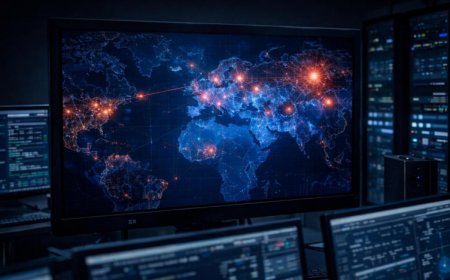
Experts from multiple cybersecurity institutes reported an alarming rise in automated phishing attempts and vulnerability-scanning attacks aimed at penetrating operational networks supporting both events. Preliminary data from European and U.S. cyber-defence units indicate that several hundred intrusion attempts per hour have been detected, a figure nearly three times higher than in comparable pre-event periods during previous global competitions.
Officials responsible for digital risk oversight at both sporting events have confirmed that while no critical systems have been breached, the sophistication and velocity of the attacks point to an evolving threat landscape shaped by advancements in AI-driven automation.
AI-Powered Hacking Tools Accelerate Threat Velocity
Cybersecurity researchers noted today that AI-enabled attack systems are now capable of generating highly personalised phishing lures within seconds, synthesising previous breach data and publicly available social metadata. These tools can also run automated vulnerability scans across thousands of endpoints simultaneously, making traditional perimeter defences insufficient as standalone safeguards.
Authorities overseeing cybersecurity for the Winter Olympics reported that several attempted intrusions were linked to automated botnets capable of self-modifying attack patterns based on detected firewall responses. The growing prevalence of autonomous malware capable of mimicking legitimate user behaviour further complicates detection, requiring advanced behavioural-analytics systems to distinguish real activity from hostile mimicry.
Security specialists also explained that attackers are exploiting global visibility around major events to execute social-engineering campaigns that impersonate organisers, sponsors and broadcasting networks. These attacks seek to compromise individuals involved in operations, logistics, or media distribution through deceptive login portals and credential-harvesting schemes. Officials emphasised that such targeted attacks have become more frequent in the past week as event preparation intensifies.
Winter Olympics and Super Bowl Deploy Enhanced Defensive Protocols
Event organisers confirmed that both major competitions have expanded cybersecurity measures in response to heightened threat alerts. At the Winter Olympics, technical teams have deployed multi-layered defence mechanisms including network segmentation, real-time threat-intelligence feeds, and coordinated monitoring with international cyber-defence agencies. The systems incorporate automated intrusion-prevention capabilities that trigger segregation of compromised pathways within milliseconds.
Similarly, security teams supporting the Super Bowl have activated a specialised cybersecurity operations centre integrating federal, local and private-sector monitoring systems. This includes continuous scanning of digital ticketing platforms, stadium operations networks, and live broadcast feeds to prevent tampering or data manipulation during peak viewership windows.
Officials overseeing the events indicated that cybersecurity teams have been increased by over 40 percent compared to last year, reflecting the scale of global attention and the corresponding threat levels. Early tests of system resilience demonstrated improved stability, though security administrators emphasised that threat actors remain persistent and adaptive.
Geopolitical and Criminal Groups Among Key Threat Sources
Analysts monitoring attack origins report that threat activity appears to stem from a combination of geopolitically aligned hacking groups and financially motivated cybercriminal organisations seeking opportunities during global events. Some attack signatures are consistent with state-linked groups previously associated with disruption campaigns targeting international institutions and critical infrastructure.
Experts warn that large sporting events create ideal targets due to the convergence of global live broadcasting, extensive logistical networks, and public-facing digital systems. Disruption to any of these areas, including event scoring databases, transport coordination platforms, or media transmission systems, could lead to significant operational and reputational damage.
Investigators added that cybercriminal networks are increasingly using artificial intelligence to automate credential-stuffing attacks on official mobile apps, betting platforms, and hospitality systems connected to event infrastructure. These groups often exploit the surge in global online traffic during major sporting competitions to embed malicious activity within a high-noise environment.
International Cybersecurity Cooperation Intensifies
Authorities from multiple countries confirmed today that real-time data sharing has been activated under several international cybersecurity cooperation frameworks. These include cross-border intelligence exchanges, rapid-response threat notifications, and coordinated countermeasure planning among national CERTs, defence cyber divisions and private-sector innovation labs.
Cybersecurity researchers emphasise that the scale of the attacks highlights the expanding need for global defensive collaboration as artificial intelligence becomes a force multiplier for malicious actors. Agencies involved in the defence of both sporting events have deployed adaptive AI-driven defensive systems designed to counter machine-generated attacks by identifying behavioural anomalies, rapid pattern shifts and high-velocity distributed traffic.
Officials noted that the coming week will be critical as the Winter Olympics progresses and pre-Super Bowl peak engagement approaches. Monitoring teams expect continued escalation in automated threat attempts, necessitating heightened alert levels and continuous system stress-testing across all digital platforms connected to the events.
Conclusion
The surge in cyberattacks targeting the Winter Olympics and the Super Bowl underscores the growing vulnerability of global sporting events in an era dominated by AI-accelerated cyberthreats. Security teams are responding with unprecedented levels of preparedness, deploying advanced defensive systems and coordinating with international partners to safeguard critical infrastructure.
As global viewership expands and digital systems become more tightly integrated with event operations, cybersecurity analysts warn that proactive defence will remain essential. The measures adopted this year may set new benchmarks for securing future international events, with artificial intelligence shaping both the threats and the solutions at the heart of global cybersecurity strategy.