
























Trumed Medical Devices: Engineering India’s Next Generation of Life-Saving Technologies
Trumed Medical Devices is redefining India’s biomedical innovation through indigenous engineering, life-saving cardiac technologies and integrated healthcare solutions.
In India’s rapidly evolving healthcare ecosystem, innovation is no longer optional — it is essential. While many medical devices used in critical procedures are still imported, a new wave of indigenous engineering is quietly redefining what is possible.
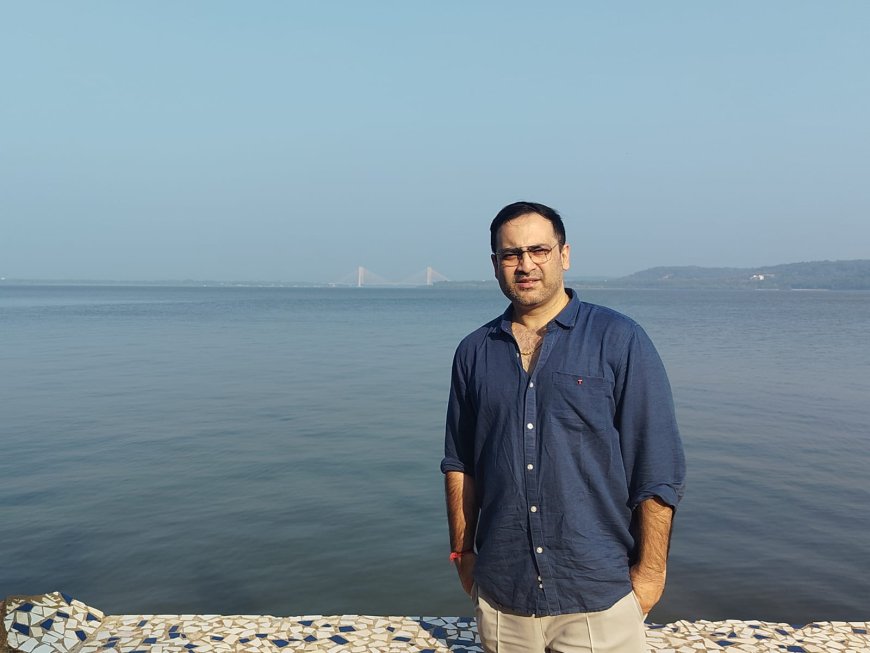
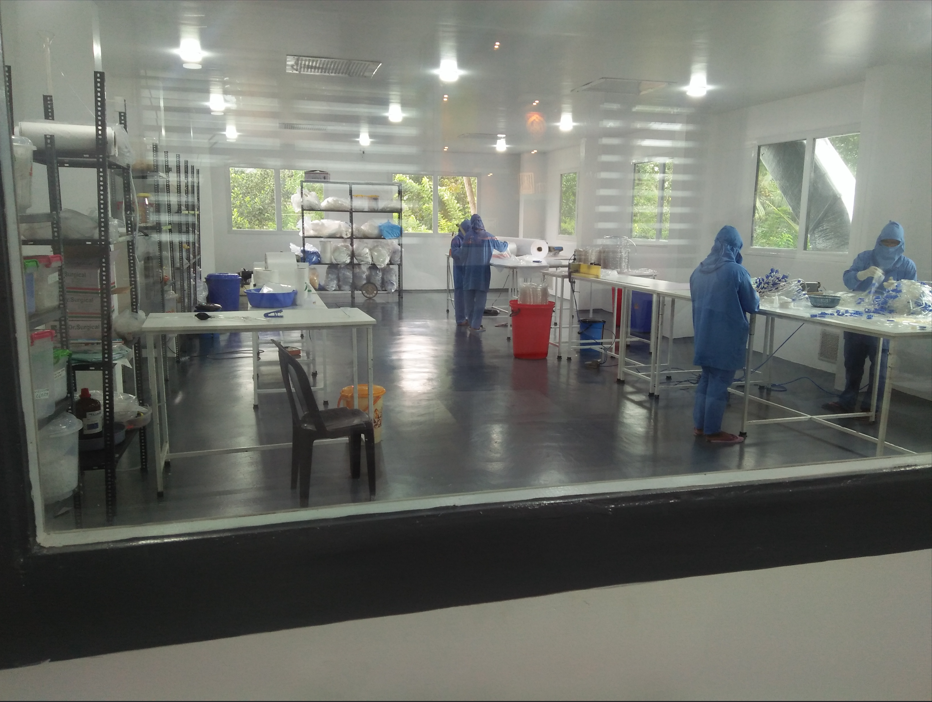
At the forefront of this movement stands Trumed Group, promoted in October 2016 by technocrat Mr. H. Vijayakumar, with three decades of medical device exposure in India and overseas. Built as a platform for attracting and onboarding deep scientific, multi-disciplinary expertise, patient-centric design, and a world-class manufacturing unit, Trumed demonstrates the conviction that world-class biomedical technology can be conceived, developed, and delivered in India.
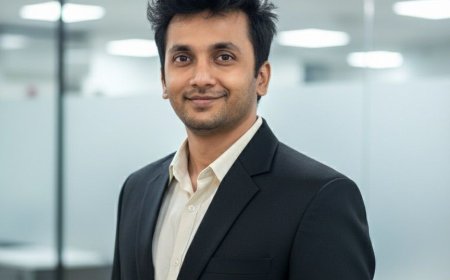
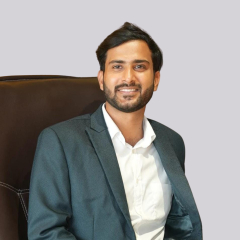
Founded with the mission to integrate science into complex life-saving medical devices, Trumed is expanding from first-in-feature devices to a total integrated solution provider—from biomaterials to hybrid devices—requiring a deeper intersection of engineering, research, and healthcare impact. Behind this ambitious expansion venture is Prof. Anirban Roy, a distinguished chemical engineer, innovator, and entrepreneur whose work spans academia, industry, and biomedical device commercialisation.
From Chemical Engineering to Biomedical Innovation
Prof. Anirban Roy is not a conventional startup founder. Holding a PhD in Chemical Engineering, he is a practicing engineer whose strengths lie in design, development, and building pilot plants for reactors, water treatment, and desalination systems. Over the years, his career has bridged heavy industry and healthcare innovation.
He has worked as a consulting engineer for industry leaders such as Tata Steel, Jindal Steel, and Vizag Steel, and served as Team Leader for Advanced Filtration Technologies at GE Appliances. He also led a startup in Delhi focused on commercialising water filtration technologies, gaining firsthand exposure to translating research into scalable products.
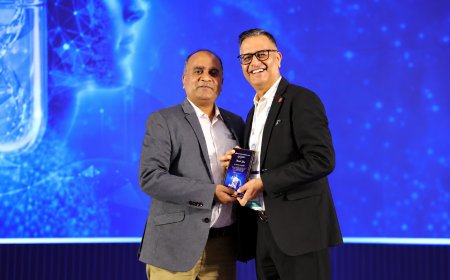
One of Prof. Roy’s most remarkable achievements came during his doctoral research at IIT Kharagpur, where he developed a low-cost indigenous hemodialysis membrane spinning technology. This breakthrough earned him three National Awards from the Government of India, including recognition among the DST–Lockheed Martin Top 10 Innovations, for which he received a Gold Medal. His work demonstrated how chemical engineering principles could be applied to solve real-world healthcare problems in a technically viable and scalable way.
Today, Prof. Roy serves as an Associate Professor in the Department of Chemical Engineering at BITS Pilani, Goa, and is the Faculty In-Charge of the BITS Goa Innovation, Incubation, and Entrepreneurship Society (BGIIES), where he continues to mentor young innovators while building Trumed’s technological foundation.
The Vision That Sparked Trumed
The idea behind Trumed Medical Devices was not born overnight. While working on indigenous dialysis technologies, Prof. Roy connected with Mr. H. Vijayakumar, a veteran in biomedical devices with over three decades of experience.
Mr. Vijayakumar played a critical role in developing and commercialising some of India’s earliest medical devices, including the country’s first blood oxygenator, blood bags, and mechanical heart valves at Shri Chitra Tirunal Institute. Later, as CEO, he steered the Spictra brand of cardiac surgery devices.
Through extensive discussions, the duo recognised a deeper opportunity: membrane-based interventions in high-end procedures like cardiac surgery required complete, integrated engineering solutions rather than fragmented products. What followed was an eight-year journey of planning, applying for grants, designing systems, and confronting on-ground challenges.
Throughout this period, one principle became clear — only core engineering can revive India’s biomedical device ecosystem. Trumed was built on a multidisciplinary philosophy, bringing together expertise from chemical, mechanical, electronics, and computer science engineering to capture India’s share of a billion-dollar global medical device market and enter the global arena as an integrated technology solution provider.
Identifying Gaps in a Rapidly Advancing Clinical World
Medical technology evolves alongside clinical science, and every advancement creates new gaps. Trumed’s founders observed that while many devices existed, few were optimised for affordability, performance, and manufacturability in India.
The challenge was twofold: identifying emerging clinical needs and packaging them into accessible solutions, and implementing these innovations in zero-defect manufacturing platforms capable of meeting global standards.
At Trumed, this philosophy translated into building not just devices, but breakthrough engineering platforms. Whether it is coronary stents changing cardiac repair or zirconia transforming dentistry, the company believes trend-shifting innovations demand long-term commitment rather than short-term replication.
Engineering Life-Saving Solutions for Cardiac Surgery
Trumed Medical Devices focuses on developing products for critical, life-saving procedures, particularly in open-heart surgery. Their medical devices are designed to compete globally, not just locally.
What sets Trumed apart is its engineering-first, first-in-feature approach. Products feature advantages such as low prime volume, enhanced performance, and optimised safety parameters—improvements that directly impact patient outcomes during complex surgeries.
Rather than importing designs, Trumed engineers and manufactures indigenous technologies that meet international benchmarks, proving that India can produce state-of-the-art biomedical devices.
Facing Skepticism and Building with Conviction
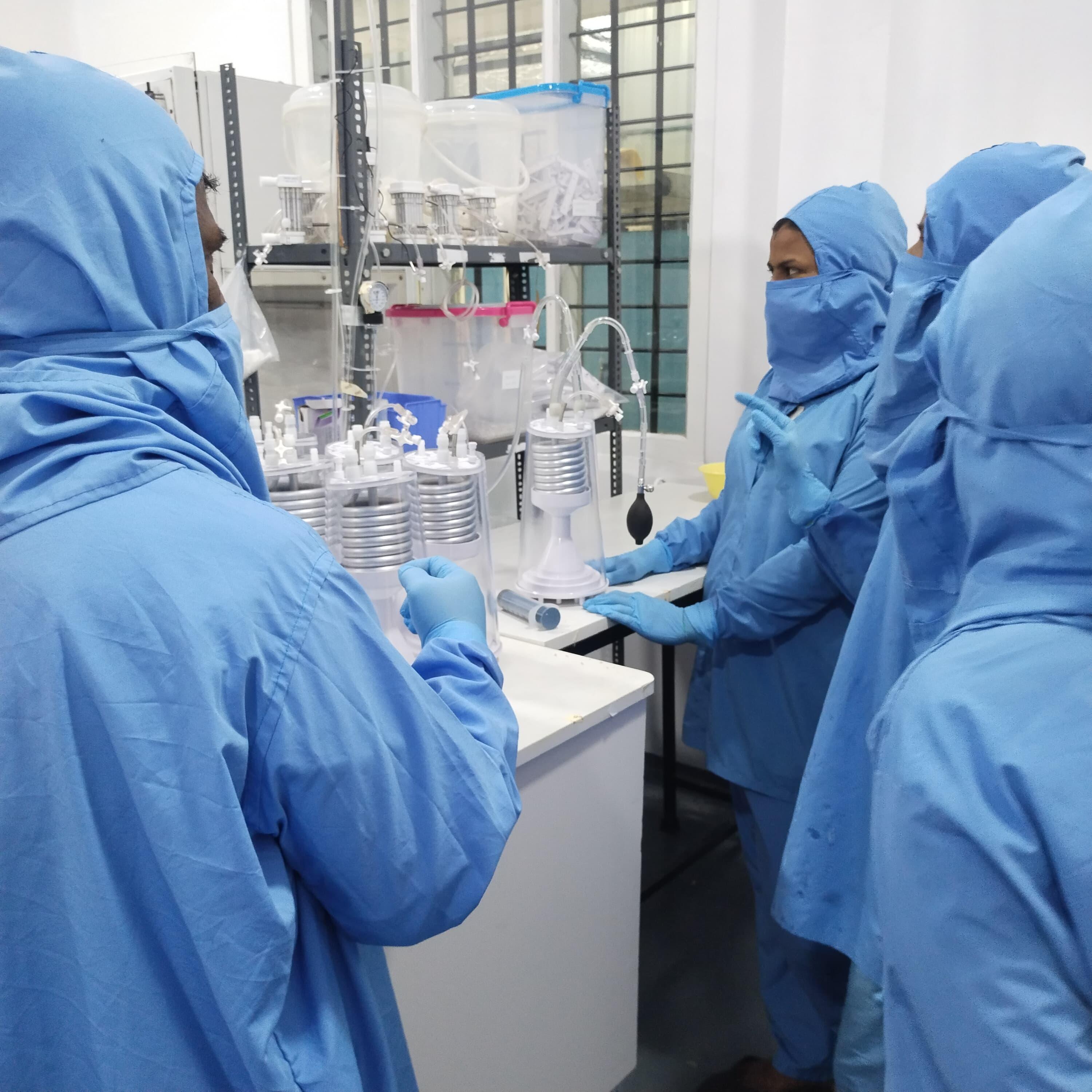
Like many deep-tech ventures, Trumed faced its toughest challenge early—belief. Stakeholders initially doubted the vision of building a high-end biomedical device company from a small village in Kerala.
Grant applications were rejected with remarks such as “products already exist in the market” or “there is no innovation.” Ironically, one such rejection in December 2019 for membrane oxygenators was followed by a global shortage and multi-fold price surge during the pandemic.
Instead of abandoning the mission, Trumed continued with its own funds, determined to prove that indigenous biomedical manufacturing could match global quality standards. This resilience became the company’s defining strength.
Prof. Roy also acknowledges the growing impact of government initiatives such as the RDI Fund and biomedical-specific grants, which are now helping entrepreneurs overcome funding challenges in development-intensive sectors.
A Breakthrough in Infant Cardiac Surgery
One of Trumed’s most significant turning points was its decision to enter the high-barrier domain of open-heart surgery, particularly addressing gaps in infant cardiac procedures.
This move required courage, engineering excellence, and deep clinical understanding. By focusing on precision-critical segments, Trumed established itself as an innovative feature provider rather than just a manufacturer.
Building the Future: From Devices to Integrated Technology
Looking ahead, Trumed Medical Devices aims to evolve into a fully integrated medical technology platform company.
Prof. Roy’s lab has designed and developed a pilot hollow fibre membrane manufacturing facility, while Mr. Vijayakumar is steering the development of hybrid medical devices using fractal and connectivity engineering. The convergence of biomaterials, digitisation, and device connectivity could position Trumed as a global pioneer in digitised therapy platforms.
Over the next five years, Trumed plans to deepen its presence in open-heart surgery while introducing trend-setting technologies that integrate materials, hardware, and digital intelligence into a single ecosystem.
Lessons for Aspiring Entrepreneurs
Prof. Roy offers grounded advice for entrepreneurs entering deep-tech and biomedical sectors.
First, he emphasises belief in core engineering. Without strong foundations in chemical and mechanical engineering, industries such as healthcare, defence, space, water, and energy cannot exist.
Second, he highlights the importance of selling products and maintaining cash flow. Raising capital is a responsibility, not an achievement. True value creation, he believes, leads to valuation—not the other way around.
Conclusion
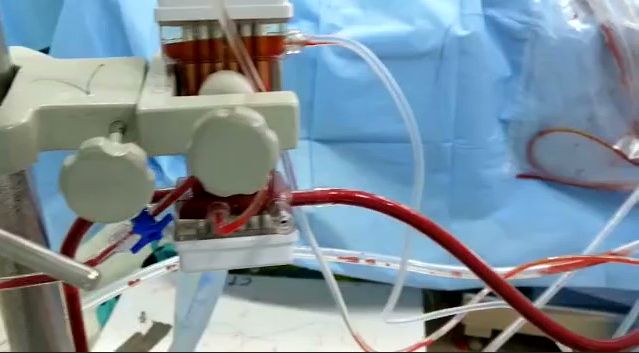
Trumed Medical Devices Pvt. Ltd. represents a bold shift in India’s healthcare innovation landscape. Built on engineering depth, clinical understanding, and long-term vision, the company is redefining how indigenous medical technologies are imagined and delivered.
From low-cost dialysis membranes to advanced cardiac surgery devices, Trumed proves that global-quality biomedical engineering can emerge from India—not by imitation, but by intelligent design and unwavering belief.
Company Link
???? Website: http://www.trumedsolutions.com/