






























Trump Demands Iran Compensation Amid Hormuz Standoff
President Trump has escalated demands for Iran to pay compensation for past attacks, further clouding hopes of reopening the vital Strait of Hormuz shipping route.

A Standoff With No End in Sight
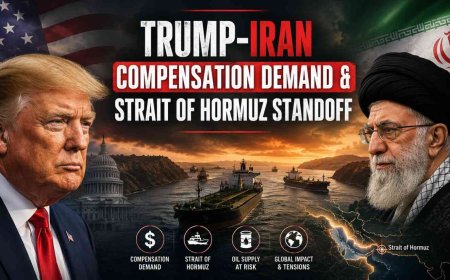
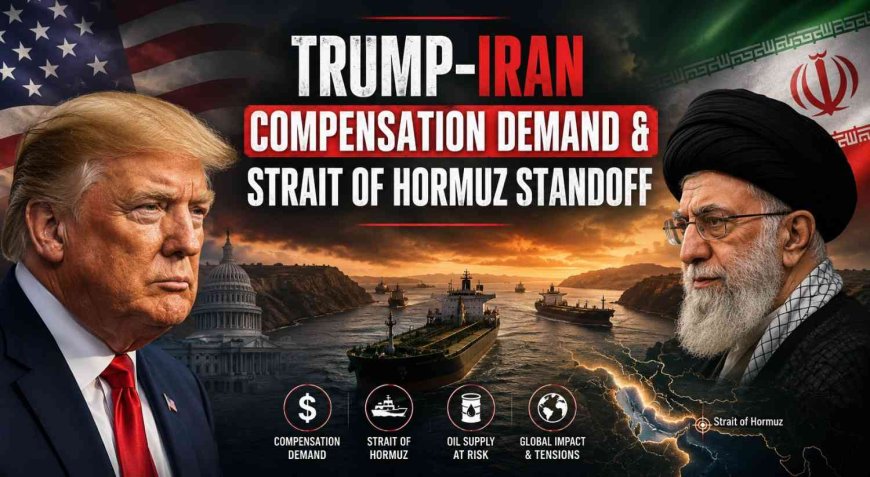
Efforts to reopen one of the world's most critical oil shipping routes suffered a fresh setback this week after President Donald Trump introduced a sweeping new demand: that Iran pay compensation for decades of alleged damages before any deal to unblock the Strait of Hormuz can move forward.
Speaking to reporters at the White House, Trump said his administration intended to seek payment covering roughly fifty years of what he described as harm inflicted by Iran, framing the demand as a direct response to Tehran's own compensation claims. The remarks came just days after Iran's Supreme National Security Council laid out a list of conditions for reopening the strait, chief among them a demand that Washington fully compensate Iran for losses tied to the recent conflict between the two nations.
Tit-for-Tat Demands Stall Diplomacy
The exchange underscores how far apart Washington and Tehran remain, even as both sides continue to signal an openness to eventual talks. Iranian officials say the strait — through which roughly a fifth of the world's oil and gas once flowed — will not reopen to commercial shipping until the United States meets a list of demands, including winding down its naval presence near Iranian waters and ending what Tehran describes as an economic blockade.
Trump, for his part, insists the strait remains functionally open and under American control, telling reporters the U.S. Navy has swept the waterway for mines and secured safe passage where needed. He described the ongoing restrictions as a "steel wall" imposed by Iran rather than a genuine security threat. Even so, shipping data tracked by maritime intelligence firms shows vessel traffic through Hormuz has slowed dramatically in recent days, falling from roughly a dozen and a half crossings on Friday to fewer than half that number by the weekend, as commercial operators grow wary of the uncertainty.
Diplomatic Threads Still Alive
Despite the hardened rhetoric, back-channel diplomacy appears far from dead. Iran has reportedly been working toward a separate arrangement with Oman to establish new, mutually recognized shipping lanes through the strait, and officials in Qatar have described talks as reaching a "critical juncture." A senior Pakistani official also suggested this week that Washington and Tehran may be nearing "some sort of arrangement," even as public statements from both governments suggest otherwise.
Adding further complexity to the picture, Iran's Supreme Leader has overseen a significant reshuffling of the country's military leadership in recent days, installing new commanders across its armed forces and the Islamic Revolutionary Guard Corps — a move some analysts interpret as an effort to consolidate control ahead of any potential negotiations, while others see it as a sign Tehran is preparing for a longer standoff.
Wider Regional Ripple Effects
The uncertainty over Hormuz has also intensified pressure on alternative shipping corridors. Iranian-backed Houthi forces in Yemen have carried out fresh attacks on the government-held port city of Mocha, raising fears that tensions could spill into the Red Sea and the Bab al-Mandeb Strait, another crucial artery for global energy shipments. A renewed flare-up in Yemen's long-running civil conflict would further complicate an already fragile regional security picture, just as governments and shipping companies scramble to find safe alternatives to Hormuz
What Comes Next
For now, both sides appear locked in a standoff that shows few signs of easing. Trump has described the current approach to Iran as "semi-negotiating," suggesting Washington intends to let economic pressure build rather than rush toward a deal. Iranian officials, meanwhile, continue to insist that compensation and a formal end to hostilities are non-negotiable prerequisites.
With global energy markets watching closely and diplomats in Doha, Muscat and Islamabad quietly working the phones, the coming days could prove decisive in determining whether one of the world's most vital shipping lanes reopens — or whether the standoff drags on, with consequences reaching far beyond the Persian Gulf.
Short Summary
President Trump has demanded that Iran pay compensation for decades of alleged damages as a condition for reopening the Strait of Hormuz, further stalling negotiations. The impasse comes as shipping traffic through the vital waterway has slowed sharply and tensions simmer across the wider region.