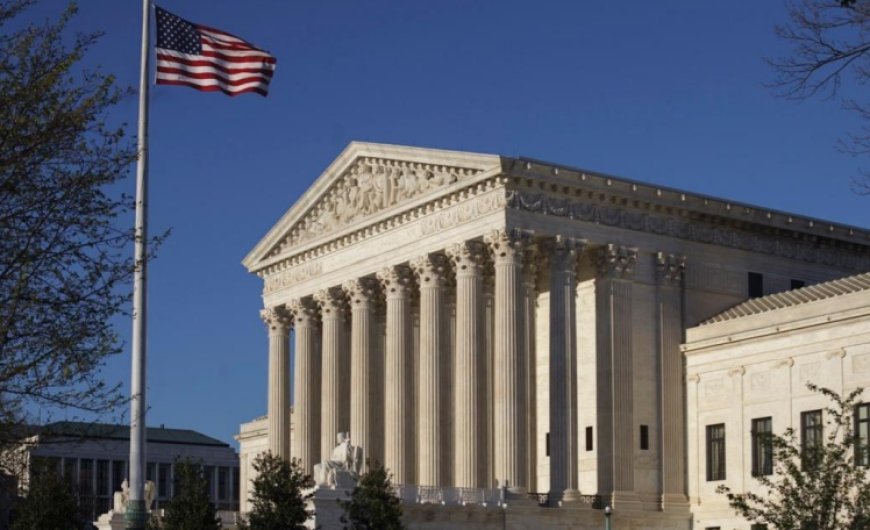
In a judgment that is being described as one of the most consequential trade-law decisions in recent U.S. history, the United States Supreme Court ruled that former President Donald Trump exceeded presidential authority when imposing broad tariff measures under emergency economic powers. The 6–3 ruling, delivered by Justice Ketanji Brown Jackson, invalidated several tariff actions taken between 2018 and 2020, arguing that the administration stretched the definition of “national emergency” beyond congressional intent.
The court held that the executive cannot unilaterally invoke emergency economic powers “to achieve long-term economic restructuring,” a statement that legal scholars say will significantly restrict similar trade manoeuvres by future administrations. The ruling comes at a time of heightened global trade tensions with China and the EU, and economists have called this a “reset moment” for rules-based trade governance. Immediate market reactions were seen in Asian and European trading floors, where sectors affected by previous Trump-era tariffs moved sharply within hours of the verdict.
Court’s Rationale
The Supreme Court emphasized that Section 301 and the International Emergency Economic Powers Act (IEEPA) cannot be used to justify long-term trade interventions without congressional oversight. Justice Jackson wrote that the administration “invoked emergency authority in a context where no emergency existed,” noting that trade imbalances or disputes “do not constitute a sudden extraordinary threat.”
In dissent, Justice Samuel Alito argued that the decision may “undermine executive flexibility during unforeseen economic crises,” but the majority reaffirmed that only Congress has the constitutional authority to regulate foreign commerce. Legal analysts say this judgment marks one of the strongest modern reassertions of congressional power over trade policy. Former USTR officials described the ruling as the court “reinstalling the guardrails” around an area where presidential discretion has steadily expanded for decades.
Impact on Global Supply Chains
Multinational manufacturers in Europe and Asia reacted positively to the decision. Several German and Japanese automakers stated that the ruling “restores predictability” after years of abrupt tariff changes. The 2018–2020 measures had targeted steel, aluminium, technology components, semiconductors, autos and consumer goods, triggering a ripple effect through global supply chains.
Economists at the Peterson Institute for International Economics noted that up to $400 billion worth of goods had been affected by Trump’s tariff actions, many under legal challenge since 2020. Trade experts say that the Supreme Court’s ruling may now open the door for compensation claims or revised tariff schedules. Asian markets responded with overnight gains, particularly in electronics and metals. A Tokyo-based analyst stated, “Washington just sent a signal that the era of unpredictable tariff presidencies has a legal limit.”
Washington’s Response
The Biden administration issued a cautious response, noting it would “review the full scope and implications” of the decision before adjusting any existing tariff frameworks. While the ruling strikes down specific actions from the previous administration, it does not automatically unwind all tariffs still in effect, particularly those applied under World Trade Organization litigation or national-security statutes.
Senior lawmakers, including Senate Finance Committee chair Ron Wyden, said the judgment highlights the need for a “modernized trade law playbook.” Meanwhile, Republican leaders signalled concern that the decision might limit executive leverage in dealing with adversarial economies. Former officials from Trump’s team released statements defending the original tariffs as “necessary to correct decades of unfair trade practices,” indicating political debate ahead of the 2026 election cycle.
China and EU Reactions
Beijing’s Ministry of Commerce welcomed the ruling, calling it “a step toward stabilizing bilateral trade relations.” Chinese exporters had been among the hardest hit, with tariffs applied on goods worth more than $250 billion during the height of the U.S.–China trade dispute. The ruling is expected to influence ongoing negotiations on technology exports, rare earths and agricultural imports.
European Union officials also praised the verdict for restoring “legal predictability” within transatlantic commerce. Several EU member states had filed formal protests during earlier tariff rounds, including disputes over automotive and aerospace components. Analysts expect that Brussels may now revive stalled dialogues on regulatory alignment and digital trade, which had been hindered by the unpredictability of tariff policies over the past six years.
Economic Outlook
Financial markets reacted cautiously, with analysts predicting short-term stabilization but long-term uncertainty as Washington re-evaluates trade statutes. While the ruling provides relief to several sectors, investors warn that upcoming political cycles could reignite tariff debates albeit within narrower constitutional limits.
Economists believe the ruling offers an opportunity for the U.S. to rebuild international trust in rules-based trade mechanisms. However, the decision may also force Congress to confront long-delayed reforms in industrial strategy, supply-chain resilience and economic security legislation. The balancing act between safeguarding national interests and avoiding protectionist excess will shape U.S. trade policy for years to come.