






























Amazon’s Zoox Expands Robotaxi Testing to Dallas and Phoenix
Amazon-owned Zoox expands robotaxi testing to Dallas and Phoenix, aiming to accelerate autonomous vehicle development and gather real-world driving data.

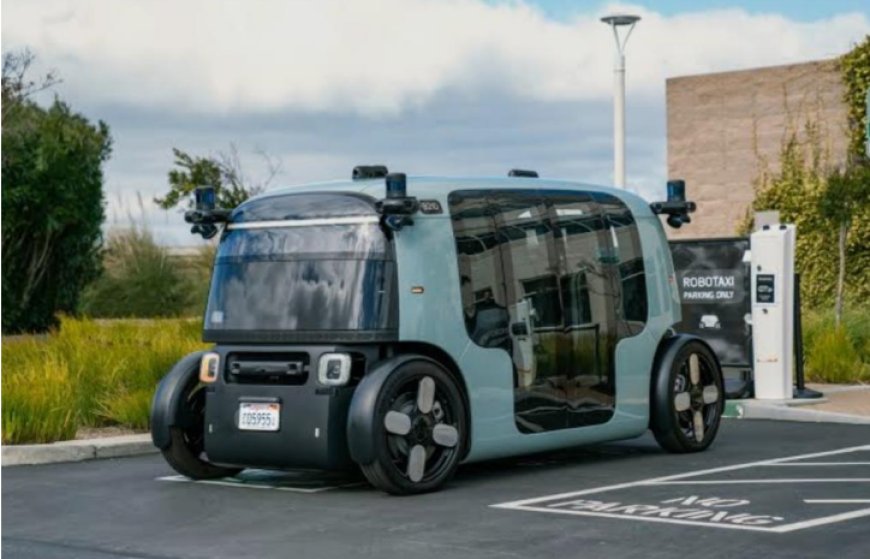
Autonomous mobility company Zoox, owned by global technology giant Amazon, has announced a significant expansion of its robotaxi testing operations across the United States.
The company confirmed that it will begin testing its autonomous ride-hailing vehicles in Dallas, Texas, and Phoenix, Arizona, expanding its testing footprint to 10 U.S. cities. The move marks another major step in Zoox’s long-term ambition to deploy fully autonomous urban mobility networks capable of transporting passengers without human drivers.
Zoox’s expansion reflects the accelerating race among technology companies and automotive manufacturers to commercialise autonomous transportation systems. With billions of dollars invested globally in self-driving technology, companies are increasingly conducting large-scale road testing to improve artificial intelligence systems that control autonomous vehicles.
By extending its testing program into additional metropolitan areas, Zoox aims to gather diverse driving data from different road conditions, traffic patterns and urban environments.
The company’s testing efforts have already achieved notable milestones. According to Zoox, its autonomous vehicles have collectively driven more than one million miles in autonomous mode and have provided rides to over 300,000 passengers through pilot programmes in cities such as San Francisco and Las Vegas. These figures demonstrate the growing maturity of the company’s self-driving technology as it moves closer to large-scale commercial deployment.
Expansion into Major U.S. Urban Markets
Zoox’s decision to expand operations into Dallas and Phoenix represents a strategic move to test autonomous systems in cities with varied infrastructure and traffic conditions.
Dallas, one of the largest metropolitan regions in the United States, offers complex road networks and dense traffic flows that provide valuable real-world testing scenarios for autonomous driving software. Phoenix, meanwhile, has become one of the country’s most prominent hubs for self-driving technology testing due to its favourable regulatory environment and relatively predictable weather conditions.
The expansion will involve deploying Zoox’s purpose-built autonomous vehicles across selected areas in both cities. These vehicles are designed without traditional steering wheels or pedals and are engineered specifically for autonomous ride-hailing services rather than adapted from conventional cars.
The vehicle’s unique design includes symmetrical seating arrangements and advanced sensor arrays that allow the system to detect pedestrians, vehicles and road obstacles in real time.
Company officials say the new testing locations will enable Zoox engineers to collect additional operational data to refine vehicle navigation algorithms and safety systems. By operating in different cities with distinct road layouts and driving behaviours, the company hopes to improve the reliability and performance of its autonomous platform before launching commercial services.
Progress in Autonomous Vehicle Development
Zoox has spent several years developing its self-driving platform, combining artificial intelligence, advanced sensors and machine learning systems capable of analysing real-time traffic conditions.
The company’s autonomous vehicle uses a suite of cameras, radar and lidar sensors to build a detailed three-dimensional understanding of its surroundings, allowing the system to make driving decisions similar to those of a human driver.
According to company reports, Zoox vehicles have already accumulated over one million autonomous miles during testing and pilot programmes. This milestone reflects years of engineering development and road trials aimed at ensuring safety and reliability.
The company has also transported more than 300,000 riders during pilot ride programmes, providing valuable user feedback while demonstrating the viability of driverless mobility services.
Executives at Zoox say the expansion into additional cities will accelerate improvements to the company’s AI systems. Each new testing location presents different road conditions, traffic patterns and behavioural scenarios that help train machine learning models responsible for controlling the vehicles.
These data-driven improvements are essential for achieving the high safety standards required for full commercial deployment.
Competition in the Robotaxi Industry
Zoox’s expansion comes amid intense competition in the rapidly evolving autonomous mobility sector.
Several technology companies and automotive manufacturers are investing heavily in robotaxi development as they seek to transform urban transportation. Companies such as Waymo, Cruise and Tesla are also conducting large-scale testing programmes across multiple cities in the United States and abroad.
The robotaxi concept is widely seen as one of the most promising commercial applications of autonomous driving technology. By eliminating the need for human drivers, companies hope to significantly reduce operating costs for ride-hailing services while increasing vehicle utilisation rates.
Autonomous vehicles could operate continuously, providing on-demand transportation services across major urban areas.
Industry analysts estimate that the global autonomous vehicle market could reach hundreds of billions of dollars in annual revenue by the early 2030s if technological and regulatory challenges are successfully addressed. However, achieving this vision requires significant investment in testing, safety validation and regulatory approvals.
Safety, Regulation and Public Acceptance
Despite rapid technological progress, the deployment of autonomous vehicles continues to face regulatory and public acceptance challenges.
Governments and transportation authorities must establish clear safety frameworks governing the operation of driverless vehicles on public roads. In many jurisdictions, companies are required to conduct extensive testing and provide detailed safety reports before commercial services are permitted.
Zoox has emphasised that safety remains its top priority throughout the testing process. The company conducts extensive simulation testing alongside real-world driving trials to ensure that its autonomous systems can respond appropriately to unexpected road conditions.
Engineers continuously monitor vehicle performance and update software to address potential risks identified during testing.
Public perception also plays a critical role in the success of autonomous mobility services. Companies like Zoox aim to build trust by gradually introducing the technology through pilot ride programmes, allowing passengers to experience autonomous transportation in controlled environments before wider rollout.
Outlook
Zoox’s expansion into Dallas and Phoenix represents another milestone in the global push toward autonomous transportation.
By extending testing operations to new cities, the Amazon-owned company is strengthening its position in a highly competitive industry that could fundamentally reshape how people move within urban environments.
While challenges remain in regulatory approval, safety validation and public adoption, the rapid pace of technological advancement suggests that robotaxi services could become a common feature of urban mobility in the coming decade.
For Zoox, the continued expansion of its testing programme is a crucial step toward turning the vision of fully autonomous transportation into reality.