







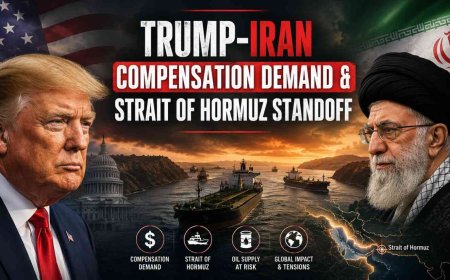




















Global Oil Supply Strained as Strait of Hormuz Security Risks Rise
Rising security threats near the Strait of Hormuz disrupt tanker movements, push oil prices higher and raise global supply and inflation risks

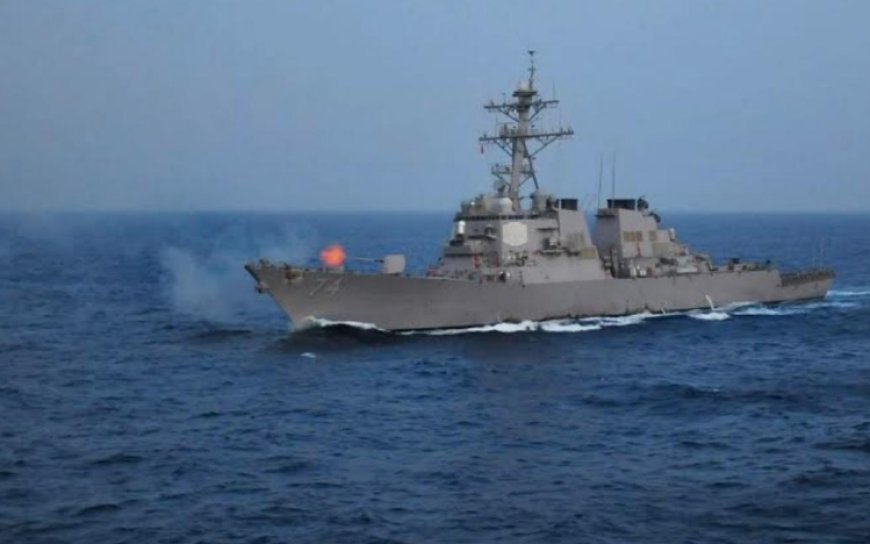
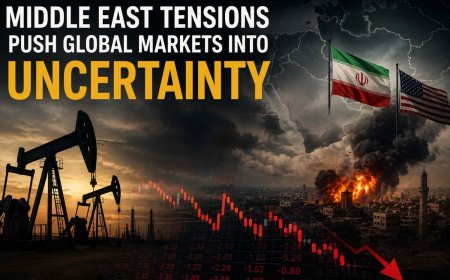
Global energy markets were shaken following escalating military activity around the Strait of Hormuz, the world’s most critical oil chokepoint, triggering supply fears across Asia, Europe and the U.S. Maritime security alerts were issued after multiple drone and missile threats were cited in the vicinity of the strait, an area through which nearly 21 million barrels of oil per day typically pass, representing about one-fifth of global consumption, according to the U.S. Energy Information Administration (EIA).
Oil traders reacted immediately as at least seven major tanker operators, including those linked to Japan, Greece and Singapore, reported temporary course diversions or speed reductions. Crude prices surged sharply in intraday trading, with Brent crude briefly crossing $88 per barrel, marking its steepest single-day jump in over two months. Analysts warn that if tensions continue, logistical disruptions could ripple into global fuel prices, refining output and shipping insurance markets.
Delayed Movements amid Maritime Conflict
Reports from maritime intelligence providers including Lloyd’s List, MarineTraffic, and AMBrey confirm that commercial tankers have slowed or altered routes after receiving multiple security advisories. The UK Maritime Trade Operations (UKMTO) office issued at least two warnings about “heightened threat activity” near the strait, prompting shipping firms to adopt risk-mitigation protocols.
According to preliminary data, average tanker transit times have increased by 12–20%, depending on vessel type. Several Very Large Crude Carriers (VLCCs) carrying Saudi, Kuwaiti and Iraqi crude opted to wait further east in the Gulf of Oman until receiving updated safety clearances. These delays are already affecting refinery schedules in Asia, with Indian and South Korean refiners reporting deferred consignments.
Shipping insurers have simultaneously raised their war-risk premiums. As of the latest notice, underwriters in London’s Joint War Committee have reclassified parts of the Strait of Hormuz zone as “high-risk,” increasing insurance rates by 15–25%, adding significant cost burdens to shipping companies.
Oil Prices & Market Outlook
Global oil benchmarks reacted sharply as news of the disruptions spread. Brent crude futures rose above $88 per barrel, while West Texas Intermediate (WTI) touched $84, with analysts attributing the surge to both fundamental and sentiment-driven pressures. The derivatives market saw an uptick in options hedging activity, suggesting traders expect further volatility.
Market strategists at Goldman Sachs and JP Morgan issued rapid assessments indicating that if exports through the strait fall by even 10%, global prices could climb an additional $5–$7 per barrel. A scenario involving severe or sustained disruption could push Brent crude past $100, a level not seen since early 2024.
Concerns also emerged about the knock-on effects on inflation. Economists from the International Energy Agency (IEA) noted that prolonged instability could “add measurable upward pressure” on global inflation rates, particularly in energy-dependent economies such as India, China, Italy and Japan.
Gulf Exporters Activate Emergency Protocols to Manage Risk
Major Gulf producers—Saudi Arabia, the United Arab Emirates, Qatar and Kuwait—activated contingency plans designed for maritime emergencies. The Saudi Ministry of Energy confirmed coordination with tanker operators to ensure safe passage, while Abu Dhabi’s ADNOC moved a portion of its outbound shipments through the Fujairah bypass, which allows oil to flow without entering the strait.
Energy officials in Kuwait and Bahrain also issued statements assuring customers that supply commitments would be honoured despite temporary adjustments. QatarEnergy, one of the world’s largest LNG exporters, reported no disruption to LNG cargoes so far but acknowledged that risks “remain elevated.”
The Gulf region collectively exports more than 30% of the world’s crude oil, making stability in the Strait of Hormuz central to global economic security. Any prolonged disruption, officials warn, could force producers to adjust output or redirect shipments, impacting contractual obligations.
Global Response
The U.S. Fifth Fleet, based in Bahrain, confirmed that its naval assets were “monitoring and securing freedom of navigation” in coordination with allies. Washington and European capitals held emergency discussions on Friday to evaluate potential impacts on supply chains and strategic stockpile utilisation.
The International Maritime Security Construct (IMSC), which includes the U.S., UK, Bahrain and other partners, raised patrol intensity in the Gulf of Oman. Japan’s Ministry of Economy, Trade and Industry (METI) also stated that it was “watching the situation closely” and was prepared to tap its strategic reserves if necessary to stabilise domestic markets.
India, heavily dependent on Gulf oil, convened a review meeting under the Ministry of Petroleum and Natural Gas. Officials said the country maintains reserves equivalent to 9.5 days of strategic crude, with additional commercial stockpiles available to buffer short-term disruptions.
Outlook
Global analysts believe that continued tension could challenge world economic recovery. The World Bank’s energy outlook model indicates that a protracted 25–30% reduction in strait traffic would have “significant spillover effects” on shipping, aviation, petrochemicals and manufacturing sectors.
Supply-chain strategists emphasize that disruptions at Hormuz affect not just crude oil but also diesel, jet fuel, petrochemical feedstocks, and LNG, integral components of global industry. Already, freight forwarders in Singapore and Rotterdam report early delays in oil-linked shipments.
Financial markets are showing early signs of stress, with energy stocks rising and airline stocks dipping. “This is a chokepoint the world cannot afford to see compromised,” said one senior analyst at S&P Global. “Every hour of uncertainty amplifies the global economic ripple.”