


































Tech Giants Commit to Funding Electricity Costs for AI Data Centers
Major tech companies pledge to cover rising electricity costs for AI data centers, aiming to protect households and small businesses from higher energy bills.

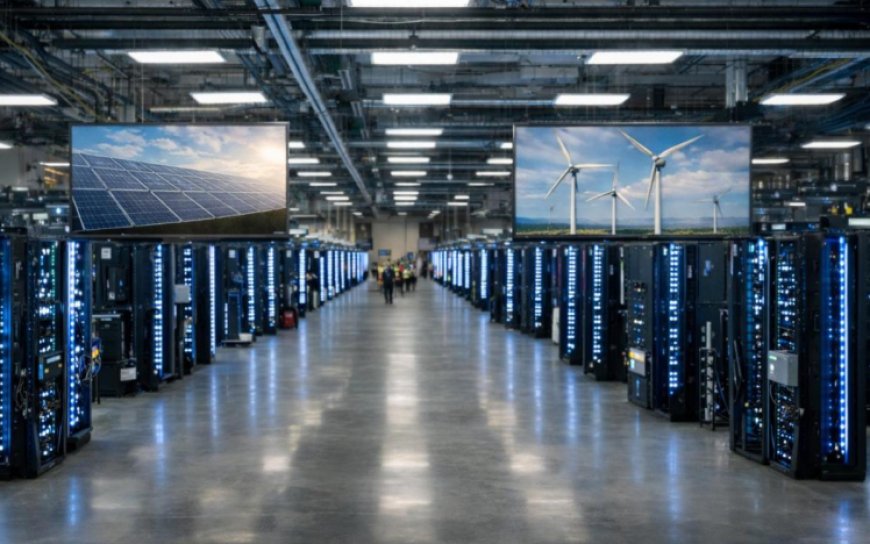
Major technology companies have agreed to shoulder the rising electricity costs required to power next-generation artificial intelligence data centres, committing not to pass those costs on to households and small businesses. The pledge, announced following discussions with U.S. policymakers and energy regulators, comes as the rapid expansion of AI infrastructure raises concerns about the strain on electricity grids and the possibility that ordinary consumers could face higher utility bills.
The companies participating in the initiative include Google, Microsoft, Meta, Amazon, Oracle, OpenAI and xAI, all of which are rapidly expanding computing infrastructure to support increasingly sophisticated AI models. The commitment is widely referred to as a “ratepayer protection pledge,” designed to ensure that utilities do not recover the enormous electricity demand from AI facilities by increasing tariffs for residential customers.
The issue has become central to the global debate about artificial intelligence infrastructure. AI training clusters and cloud computing facilities require enormous amounts of energy to operate high-performance processors and maintain cooling systems. According to estimates cited by policymakers and research organisations, a single large AI data centre can consume as much electricity as tens of thousands of households, prompting calls for safeguards to prevent energy costs from being shifted onto the public.
AI Infrastructure Driving Surging Electricity Demand
The rapid growth of artificial intelligence applications has dramatically increased demand for data-centre capacity worldwide. Training advanced AI models requires vast clusters of graphics processing units (GPUs) and specialised chips that operate continuously, consuming significant electricity while generating large amounts of heat that must be managed through intensive cooling systems.
Research by the International Energy Agency (IEA) suggests that global data-centre electricity consumption could double by the end of the decade, driven largely by artificial intelligence workloads. The expansion is particularly pronounced in the United States, where major technology companies are building new facilities in states such as Virginia, Texas, Arizona and Oregon, areas that offer access to land, connectivity and relatively low energy costs.
Industry analysts say the energy requirements of AI systems have escalated rapidly. Training large-language models and generative AI systems can require thousands of specialised processors operating simultaneously, and these facilities must run continuously to deliver cloud services to millions of users. As a result, technology companies have begun investing not only in computing infrastructure but also in new energy projects, including renewable power and advanced grid solutions.
Tech Companies Commit to Bearing Infrastructure Costs
Under the pledge announced after consultations with government officials and regulators, participating technology companies agreed that the cost of powering new AI data centres should be borne by the companies themselves rather than by ordinary electricity customers. The agreement aims to ensure that the expansion of artificial intelligence does not lead to higher power bills for households or small businesses.
The pledge effectively means that companies such as Amazon Web Services, Microsoft Azure, Google Cloud and Meta Platforms will finance the additional power generation and grid upgrades required for their AI operations. This could involve investing in new renewable energy projects, purchasing long-term power supply contracts, or funding infrastructure improvements needed to support energy-intensive computing facilities.
Executives from several companies have acknowledged that maintaining public trust in AI infrastructure requires transparency around energy usage. Microsoft President Brad Smith has previously noted that “the energy demand of AI must be matched with responsible investment in power generation and infrastructure,” while other technology leaders have stressed the importance of ensuring that the growth of AI does not impose hidden costs on the public.
Governments and Regulators Raise Energy Concerns
The pledge follows growing scrutiny from governments and energy regulators about the impact of artificial intelligence on national power grids. Policymakers in the United States and Europe have warned that uncontrolled expansion of AI data centres could strain electricity networks and complicate efforts to maintain stable energy prices.
Regulators have expressed concern that utilities might attempt to recover infrastructure costs through higher electricity tariffs. In regions where data-centre clusters are expanding rapidly, electricity demand from technology facilities can rival that of entire cities. Energy planners say that without safeguards, the cost of upgrading power plants and transmission networks could be passed on to consumers.
Officials involved in discussions around the pledge emphasised that protecting ratepayers was a key objective. By committing to finance their own power requirements, technology companies aim to reassure regulators and the public that the AI boom will not result in higher household electricity bills.
Investments in Clean Energy and Grid Infrastructure
Another critical aspect of the pledge involves long-term investments in energy generation and grid modernisation. Many technology companies have already begun developing large renewable-energy portfolios to support their growing infrastructure needs. Firms including Google, Amazon and Microsoft have signed some of the world’s largest renewable power purchase agreements in recent years.
These agreements include investments in solar farms, wind power projects and energy-storage facilities designed to supply electricity to data centres while reducing carbon emissions. Technology companies have also explored innovative solutions such as advanced battery systems and next-generation nuclear energy to meet the continuous power demands of AI computing.
Energy analysts say that these investments could accelerate the transition toward cleaner energy systems. By committing billions of dollars to renewable power infrastructure, technology firms may help expand energy capacity while ensuring that their own computing operations remain sustainable.
Outlook
The pledge by major technology companies marks an important step in addressing one of the most pressing challenges of the AI era: the enormous energy footprint of digital infrastructure. As artificial intelligence continues to reshape industries ranging from finance and healthcare to manufacturing and entertainment, the demand for computing power is expected to grow rapidly.
By agreeing to cover the costs of the electricity needed to run AI data centres, companies such as Google, Microsoft, Meta, Amazon and OpenAI are seeking to demonstrate that technological progress can proceed without imposing additional burdens on consumers. The commitment may also help establish a broader framework for how emerging technologies should manage their environmental and economic impact.
Looking ahead, policymakers and industry leaders will continue to debate how best to balance innovation with sustainability. If successful, the pledge could serve as a model for responsible infrastructure development in the digital age ensuring that the benefits of artificial intelligence are delivered without transferring the hidden costs of its power consumption to the public.