
































Helium Shortage Emerges as New Threat to Global Tech Supply Chains
Global helium shortage threatens semiconductor production and tech supply chains, exposing risks from geopolitical tensions and limited supply sources.

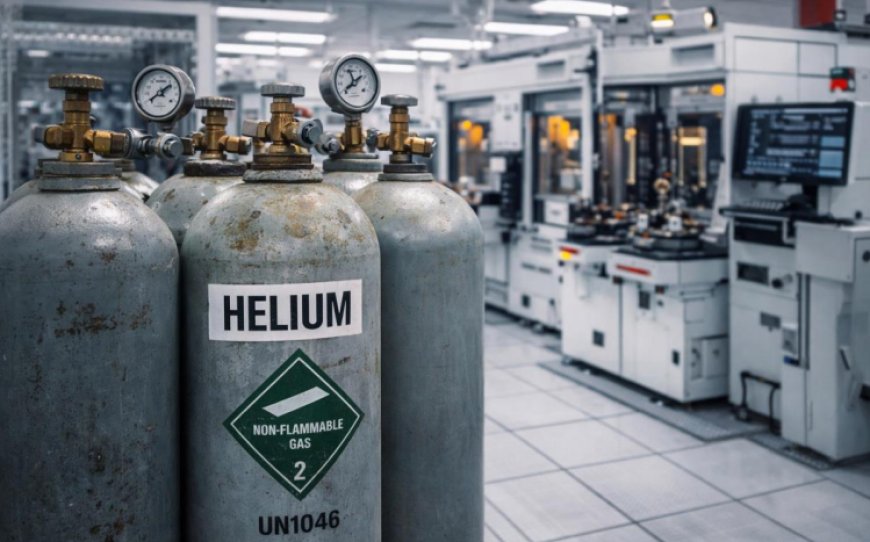
A new and largely overlooked supply crisis is beginning to ripple through the global technology industry, as shortages of helium, a critical industrial gas, start to disrupt supply chains, according to industry executives.
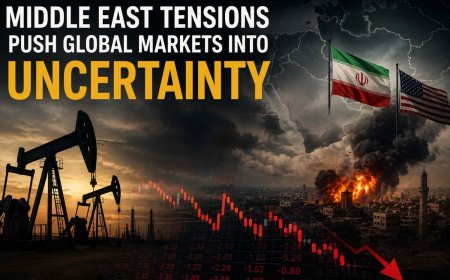
The shortage, linked to geopolitical instability and production disruptions in key supplier regions, is now being flagged as a serious concern for semiconductor manufacturing and broader high-tech industries.
Unlike more visible commodities such as oil or rare earth metals, helium operates quietly at the core of advanced manufacturing processes, making its scarcity both unexpected and potentially severe.
Executives from major Asian technology firms have indicated that the impact is already being felt, particularly in sectors dependent on precision manufacturing and high-performance computing.
The concern is not merely about rising costs, but about the potential for production bottlenecks if supplies tighten further. Given the central role of semiconductors in everything from smartphones to artificial intelligence systems, even a modest disruption could have cascading effects across global industries.
The situation highlights a broader vulnerability within global supply chains: the reliance on a small number of geographically concentrated sources for critical materials.
As helium shortages begin to intersect with geopolitical tensions and rising demand, the issue is emerging as a significant strategic risk, prompting calls for diversification and long-term planning across the technology sector.
Helium’s Critical Role in Semiconductor Manufacturing
Helium plays an indispensable role in semiconductor production, particularly in processes that require extreme precision and temperature control.
The gas is used to cool silicon wafers during manufacturing and to maintain stable environments in advanced fabrication processes. Its unique physical properties—including an extremely low boiling point—make it irreplaceable in many high-tech applications.
The importance of helium extends beyond semiconductors into areas such as quantum computing, aerospace engineering, and medical imaging technologies.
However, it is within chip manufacturing that its absence would be most acutely felt. Industry experts warn that without a steady supply of helium, production lines could slow or even halt, particularly in facilities operating at the cutting edge of technology.
Compounding the issue is the lack of viable substitutes. Unlike other industrial inputs, helium cannot be easily replaced or synthesized, making supply disruptions particularly difficult to manage.
This dependence underscores the strategic importance of helium within the global technology ecosystem and explains why even early signs of shortage are being closely monitored by industry leaders.
Supply Disruptions and Geopolitical Concentration
One of the primary drivers of the current shortage is the concentration of helium production in a limited number of regions, particularly Qatar and the United States.
Qatar alone accounts for a significant share of global supply, making disruptions in its production facilities highly consequential. Recent geopolitical tensions have led to interruptions in natural gas processing operations, which in turn has reduced helium output.
These disruptions have already begun to push prices higher, with reports indicating sharp increases in helium costs as supply tightens.
The situation has exposed the fragility of a supply chain that depends heavily on a few large-scale production sites. In the event of prolonged disruption, the impact could extend far beyond the technology sector, affecting industries ranging from healthcare to energy.
The geopolitical dimension of the crisis adds another layer of complexity. With key production facilities located in regions prone to conflict, the reliability of supply is inherently uncertain.
This has prompted renewed discussions about the need for more geographically diverse production capabilities and greater investment in alternative sources.
Early Industry Impact and Executive Warnings
Industry executives have begun to publicly acknowledge the impact of helium shortages, signaling that the issue is no longer theoretical but already affecting operations.
While some companies report having sufficient inventories in the short term, there is growing concern about the sustainability of these buffers if disruptions persist.
The warnings are particularly pronounced in Asia, where semiconductor manufacturing is heavily concentrated. South Korean officials and industry representatives have cautioned that prolonged shortages could disrupt production, with potential implications for global supply chains.
The concern is amplified by the fact that many companies operate on tightly optimized production schedules, leaving little room for supply shocks.
At the same time, companies are exploring mitigation strategies, including diversifying supply sources and increasing inventory levels. However, these measures are seen as temporary solutions rather than long-term fixes.
The fundamental challenge remains the limited availability of helium and the structural vulnerabilities of its supply chain.
Broader Implications for Global Technology and Economy
The emergence of a helium shortage comes at a time when the global technology sector is already facing multiple challenges, including rising demand for semiconductors and ongoing supply chain disruptions.
The addition of another critical constraint could exacerbate existing pressures, potentially leading to higher costs and delays in production.
For industries dependent on advanced computing, including artificial intelligence and cloud services, the implications are particularly significant.
As demand for high-performance chips continues to grow, any disruption in the supply of key inputs could slow innovation and limit capacity expansion. This could, in turn, impact economic growth and technological progress on a global scale.
The shortage also highlights the interconnected nature of modern supply chains, where disruptions in one sector can quickly spread to others.
From consumer electronics to automotive manufacturing, the ripple effects of a helium shortage could be felt across a wide range of industries, underscoring the importance of resilience and diversification in supply chain management.
Conclusion
The emerging helium shortage represents a critical but underappreciated risk to the global technology ecosystem.
As executives warn of its growing impact, the issue is likely to gain increasing attention from policymakers, industry leaders, and investors. The challenge lies not only in addressing immediate supply disruptions but also in building a more resilient and diversified supply chain for the future.
In the near term, the focus will be on managing existing inventories and mitigating the impact on production. However, longer-term solutions will require significant investment in new production facilities, alternative sources, and improved storage capabilities. Without such measures, the risk of recurring shortages is likely to persist.
Looking ahead, the helium shortage serves as a reminder of the hidden dependencies that underpin modern technology.
As the global economy becomes increasingly reliant on advanced manufacturing and digital infrastructure, ensuring the stability of critical inputs will be essential.
The current crisis may well prove to be a turning point, prompting a re-evaluation of supply chain strategies and a renewed emphasis on resilience in an uncertain world.