

































China’s BYD Set to Overtake Tesla as World’s Top EV Seller
BYD’s scale-driven strategy and cost control put it on track to surpass Tesla, signalling a major shift in global electric vehicle leadership.

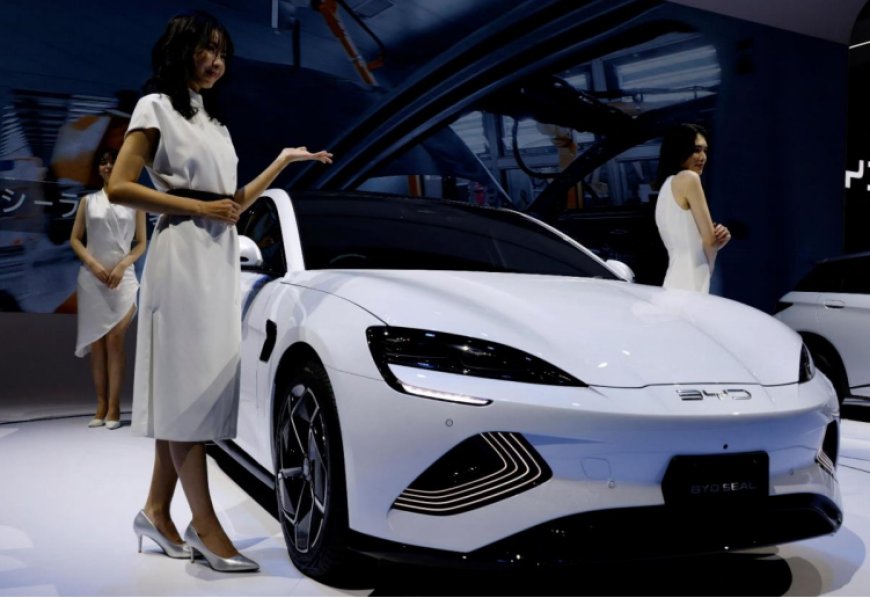
China’s BYD is on the brink of surpassing Tesla as the world’s largest seller of electric vehicles, marking a turning point in the global EV race and underscoring a broader shift in how, where and for whom electric mobility is being built. What began as a contest dominated by a Silicon Valley disruptor is increasingly being reshaped by a Chinese manufacturer that has quietly mastered scale, cost control and market breadth.
Tesla’s rise transformed electric vehicles from a niche environmental choice into a mainstream aspiration. Its cars were positioned not merely as transport but as statements of technological confidence—sleek design, over-the-air software updates and an ecosystem built around innovation. For years, Tesla defined what an EV should feel like, and it benefited from first-mover advantage in markets that were still testing consumer appetite for electric mobility.
BYD, by contrast, followed a different trajectory. Rooted in battery manufacturing long before it became a household name in automobiles, the company approached EVs as an industrial challenge rather than a branding exercise. Its vehicles are designed less around minimalism and spectacle and more around affordability, reliability and adaptability to diverse markets. While Tesla focused on a relatively narrow range of models aimed at mid-to-premium buyers, BYD built a wide portfolio—from compact city cars to sedans, SUVs and electric buses—allowing it to capture volume across income groups.
The contrast is particularly stark on pricing. BYD’s ability to control its battery supply chain has enabled it to keep costs down at a time when EV affordability remains a decisive factor for mass adoption. Tesla, despite periodic price cuts, continues to operate in segments where margins are under pressure and competition is intensifying. In emerging markets, where infrastructure is improving but purchasing power remains constrained, BYD’s models often arrive as practical alternatives rather than aspirational luxuries.
Technology remains Tesla’s strongest calling card. Its software, autonomous driving ambitions and charging ecosystem continue to set benchmarks, particularly in North America and parts of Europe. BYD’s vehicles, while increasingly sophisticated, place less emphasis on experimental features and more on durability and energy efficiency. This difference reflects not a technological gap but a strategic choice: Tesla pushes the frontier, BYD consolidates the base.
Geography has also played a decisive role. Tesla’s growth has been shaped by regulatory environments in the United States and Europe, where incentives and infrastructure have fluctuated. BYD has benefited from China’s aggressive push for electrification, strong domestic demand and supportive industrial policy. From this foundation, it has expanded rapidly into Asia, Latin America, the Middle East and parts of Europe, often entering markets where Tesla’s presence remains limited or premium-focused.
As sales volumes converge, the rivalry increasingly symbolises two visions of the EV future. Tesla represents innovation-led disruption, betting that software, autonomy and brand loyalty will sustain long-term leadership. BYD embodies manufacturing-led dominance, arguing that scale, cost efficiency and product diversity are what will truly electrify the world’s roads.
Implications for the Global EV Market
BYD’s potential rise to the top of global EV sales reflects a deeper structural change in the automotive industry. Leadership in electric mobility is no longer defined solely by technological breakthroughs, but increasingly by control over supply chains, manufacturing efficiency and access to emerging markets. As Chinese manufacturers expand globally, competitive pressure is likely to reshape pricing strategies and accelerate the pace at which EVs become accessible to a wider consumer base.
The shift also carries geopolitical and trade implications, as governments reassess industrial policy, local manufacturing incentives and protective measures in response to growing Chinese dominance in EV production. For consumers worldwide, intensified competition is expected to result in faster model cycles, broader choice and downward pressure on prices, further hastening the transition away from internal combustion engines.
Outlook
BYD overtaking Tesla in global EV sales would not signal the decline of Tesla, but rather the maturation of the electric vehicle market itself. As EVs move from early adoption to mass consumption, the balance of power is shifting towards companies that can deliver at scale and price. The next phase of competition is unlikely to be about who builds the most talked-about car, but who can electrify mobility for the largest number of people. In that contest, the race between Tesla’s innovation edge and BYD’s manufacturing muscle is only just beginning.