
































China narrows access to Nvidia AI chips, allowing purchases only under special circumstances
China tightens oversight on Nvidia’s advanced AI chip purchases, allowing access only in special cases as it balances tech control, self-reliance and geopolitics.

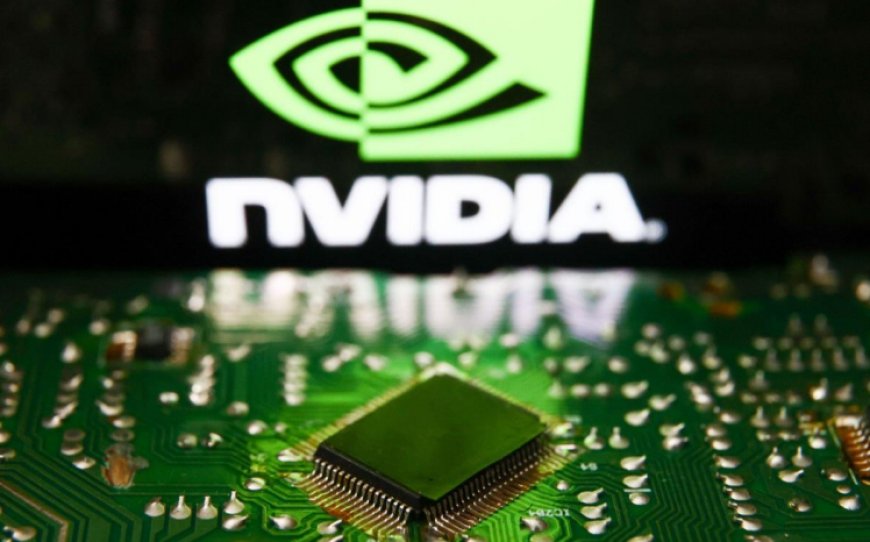
China has moved to tighten oversight of purchases of Nvidia’s advanced artificial intelligence chips, instructing domestic companies that such acquisitions will now be permitted only under “special circumstances”. The guidance, conveyed to selected technology firms, represents a subtle yet consequential shift in Beijing’s approach to foreign-made high-performance semiconductors at a time of intensifying geopolitical and technological rivalry with the United States.
While the directive stops short of a formal ban, its deliberately narrow framing introduces fresh uncertainty for Chinese companies reliant on cutting-edge computing power. Regulators have not publicly defined what qualifies as “special circumstances,” though industry sources indicated that limited use cases such as academic research or non-commercial applications may be viewed more favourably. The lack of clarity leaves companies navigating approvals on a case-by-case basis, reinforcing the state’s discretionary control over critical technology imports.
The Chips at the Centre of the Debate
The policy primarily affects Nvidia’s H200 artificial intelligence processors, among the most powerful data-centre chips currently available and a cornerstone of global AI infrastructure. These processors are widely used to train and deploy large language models, support cloud computing platforms, and power advanced analytics across sectors ranging from finance to healthcare.
China has historically been one of Nvidia’s most important overseas markets, with demand driven by a rapidly expanding AI ecosystem and large-scale data centre investment. However, access to Nvidia’s most advanced chips has increasingly become entangled in broader strategic considerations, as both Beijing and Washington seek to balance commercial needs with national security and technological sovereignty.
Neither Chinese authorities nor Nvidia immediately issued public comments on the new guidance, underscoring the opaque nature of policy signalling in this space.
Policy Timing and Cross-Border Contradictions
The move comes amid seemingly contradictory developments in the United States. On the same day the Chinese restrictions were reported, U.S. authorities approved exports of Nvidia’s H200 chips to China under specific conditions. Those conditions reportedly include technical safeguards, quantity limits relative to U.S. shipments, and explicit prohibitions on military or sensitive government use.
The juxtaposition highlights the fragmented and often asynchronous nature of global semiconductor governance. While Washington appears to be selectively easing export controls to preserve commercial channels, Beijing is tightening its own gatekeeping mechanisms not necessarily to block access outright, but to retain leverage and encourage domestic alternatives.
Earlier reports had suggested that some Chinese firms were informally advised to delay or pause orders of advanced foreign AI chips as authorities reassessed import priorities, pointing to a broader recalibration rather than a sudden policy shift.
Implications for Nvidia and the AI Supply Chain
For Nvidia, the tightening of China’s internal purchasing rules adds another layer of complexity to an already constrained market. The company has spent recent years redesigning and reclassifying products to comply with evolving U.S. export controls, while attempting to preserve its presence in China’s vast AI sector.
On January 13, Nvidia also addressed market speculation by stating that it does not require upfront payments for H200 chip orders in China, countering reports that stricter financial terms had been imposed due to regulatory risk. The company said its commercial practices remain consistent, though past advance-payment arrangements reflected uncertainty around approvals rather than a permanent shift in policy.
Despite these reassurances, analysts note that even partial restrictions can have outsized effects. Large AI projects require long planning horizons and predictable hardware supply, and regulatory ambiguity can delay investment decisions or redirect demand toward less capable, but more accessible, alternatives.
Domestic Strategy and the Push for Self-Reliance
Beijing’s approach is closely aligned with its broader ambition to reduce dependence on foreign technology and accelerate the development of domestic semiconductor champions. Over recent years, Chinese policymakers have increased funding, procurement incentives, and political backing for locally designed AI chips, while urging state-linked firms to prioritise homegrown solutions where possible.
Limiting Nvidia chip purchases to exceptional cases reinforces this strategic message without provoking immediate market disruption. By narrowing approvals rather than imposing blanket bans, China retains flexibility, allowing access where deemed strategically necessary while continuing to steer the broader ecosystem toward indigenous innovation.
For Chinese cloud providers, internet platforms, and AI startups, the challenge now lies in balancing performance requirements with regulatory realities. While domestic chips are improving rapidly, they have yet to match Nvidia’s top-tier processors in certain high-end workloads, potentially slowing progress in frontier AI research and deployment.
Outlook
China’s decision to restrict Nvidia chip purchases to “special circumstances” reflects a world in which access to advanced computing power is no longer governed solely by market demand, but by strategic calculation. Rather than signalling isolation, the policy points to a model of managed access, one that allows selective engagement while reinforcing state priorities.
In the months ahead, greater clarity may emerge as companies test approval pathways and regulators refine their interpretation of necessity. Until then, uncertainty is likely to persist, not just for Nvidia, but for the global AI supply chain watching how the world’s second-largest economy calibrates its approach to critical technologies in an era defined by competition, caution, and control.