
































NASA’s Mega Moon Rocket Reaches Launch Pad, Paving the Way for Artemis II
NASA’s powerful SLS rocket reaches the launch pad as preparations intensify for Artemis II, the first crewed lunar mission since the Apollo era.

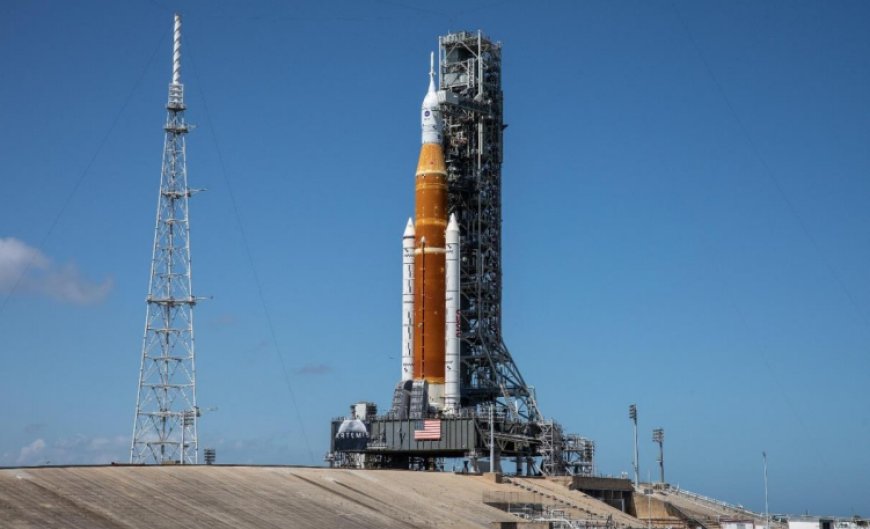
NASA has taken a decisive step toward its first crewed mission around the Moon in more than half a century, as its towering Space Launch System (SLS) rocket for the Artemis II mission was rolled out to the launch pad at Kennedy Space Center. The move marks a major milestone in the United States’ renewed lunar ambitions, signalling that preparations are entering their most visible and high-stakes phase ahead of a mission that will carry astronauts beyond Earth orbit for the first time since Apollo 17 in 1972.
The arrival of the rocket at Launch Complex 39B underscores years of engineering, testing and political commitment behind the Artemis programme, which aims not only to return humans to the Moon, but to establish a sustainable long-term presence and lay the groundwork for future missions to Mars.
A Historic Rollout at Kennedy Space Center
The Artemis II rocket, standing nearly 98 metres tall, was transported from the Vehicle Assembly Building to the launch pad using NASA’s iconic crawler-transporter, a slow but symbolic journey that has become synonymous with landmark moments in US spaceflight history. The rollout took several hours, with engineers monitoring structural loads, weather conditions and vibration levels throughout the trip.
At the heart of the launch vehicle is the Space Launch System, the most powerful rocket NASA has ever built. Generating more than 8.8 million pounds of thrust at liftoff, the SLS is designed specifically to send heavy payloads and now humans on deep-space missions. For Artemis II, the rocket will launch the Orion spacecraft on a multi-day voyage around the Moon and back to Earth.
Officials said the rollout demonstrates confidence in the integrated rocket and spacecraft after extensive testing following the uncrewed Artemis I mission, which successfully orbited the Moon in late 2022. “This is a critical step as we prepare to fly astronauts on Artemis II,” said Bill Nelson, NASA Administrator, noting that the agency is entering a “new era of exploration with safety and sustainability at its core.”
Inside Artemis II: The First Crewed Lunar Mission in Decades
Artemis II will be NASA’s first crewed mission to the Moon since the Apollo era, carrying four astronauts aboard the Orion spacecraft. Unlike Artemis III, which aims to land astronauts on the lunar surface, Artemis II is designed as a comprehensive test flight, validating life-support systems, navigation, propulsion and crew operations in deep space.
The mission will send the crew on a trajectory that loops around the Moon, reaching distances of more than 400,000 kilometres from Earth before returning home. During the flight, astronauts will conduct system checks, manual piloting demonstrations and communication tests critical for future lunar landings.
NASA has emphasised that Artemis II is about risk reduction. Lessons learned from this mission will directly inform Artemis III, which is expected to return humans — including the first woman and the first person of colour — to the lunar surface under the Artemis programme’s inclusive vision.
Engineering, Delays and the Cost of Going Back to the Moon
The path to Artemis II has not been without challenges. Development of the Space Launch System and Orion spacecraft has faced technical hurdles, schedule delays and intense scrutiny over costs. According to NASA’s Office of Inspector General, the combined development cost of SLS and Orion has exceeded $40 billion over more than a decade.
NASA officials argue that the investment reflects the complexity of building a human-rated deep-space launch system and spacecraft capable of long-duration missions beyond low-Earth orbit. The agency has also pointed to improvements made after Artemis I, including upgrades to heat shield analysis, avionics checks and ground systems at Kennedy Space Center.
Despite criticism, the Artemis programme enjoys strong bipartisan support in the US Congress, largely due to its role in maintaining American leadership in space and supporting a wide industrial base across multiple states.
Strategic Stakes: Artemis and the Global Lunar Race
Artemis II is not only a scientific and engineering mission but also a strategic one. The Moon has re-emerged as a focal point of global space competition, with countries such as China and Russia announcing their own lunar exploration plans. Through the Artemis programme and the Artemis Accords — a set of international principles for space exploration — the United States is positioning itself as the leader of a coalition of like-minded spacefaring nations.
NASA has repeatedly stressed that returning to the Moon is a stepping stone rather than the final destination. Technologies tested during Artemis II, from deep-space life support to high-energy propulsion, are intended to support future missions to Mars later this century.
“Artemis is about more than flags and footprints,” Bill Nelson has said in earlier remarks. “It’s about learning how to live and work in deep space, together with our partners, in a way that benefits humanity.”
Countdown to Launch and What Comes Next
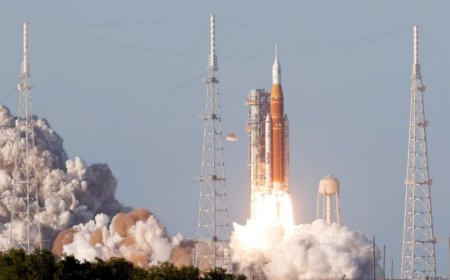
With the rocket now at the launch pad, NASA teams will carry out a series of final checks, propellant loading rehearsals and integrated system tests. While no exact launch date has been announced publicly, Artemis II is currently targeted for the coming year, subject to successful testing and favourable conditions.
As the massive SLS rocket stands on the Florida launch pad, it represents both continuity and change — echoing the Saturn V rockets of the Apollo era while embodying a modern, internationally connected vision for space exploration. For readers and space enthusiasts alike, Artemis II marks a pivotal chapter: the moment when humanity prepares, once again, to send its explorers beyond Earth and toward the Moon.