





























South Korea implements AI Regulation Law, to oversee Digital Accountability
South Korea enacts a landmark AI regulation law to strengthen digital accountability, curb deepfake misuse, and set global standards for ethical, transparent AI governance.

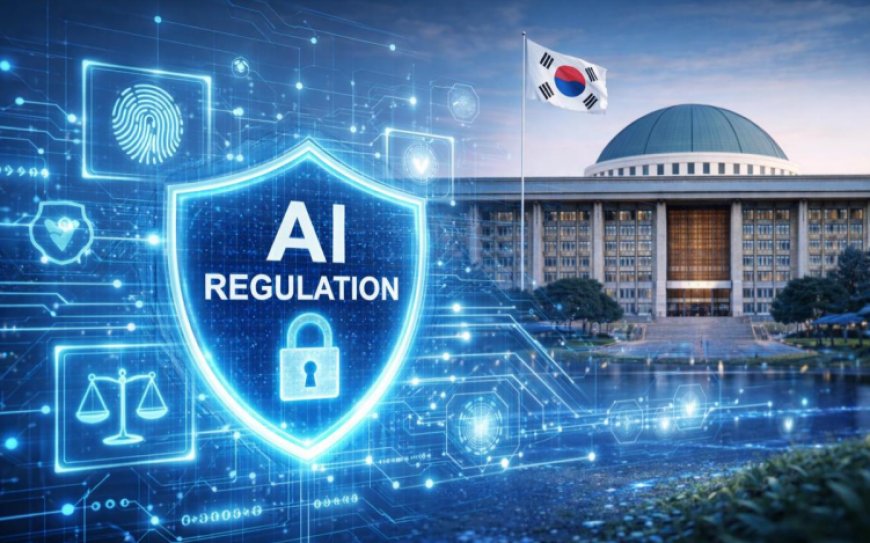
In a decisive move that places it at the forefront of global technology governance, South Korea has officially implemented one of the world’s most comprehensive artificial intelligence regulation laws, marking a watershed moment for the nation’s digital ecosystem. The legislation, years in development, aims to address deepfake misuse, algorithmic accountability, data governance, and ethical AI deployment across public and private sectors. As AI systems continue to permeate daily life from banking to healthcare to national security the new law positions South Korea as a global testbed for future tech regulation.
The move arrives amid growing international concern over AI-generated misinformation, privacy violations, automated decision-making risks, and national security vulnerabilities. With the law taking full effect this week, South Korea becomes one of the first advanced economies to operationalise a regulatory framework that goes beyond ethical guidelines and applies binding, enforceable obligations on AI developers, companies, and state agencies.
Scope of the New AI Law
The new regulatory framework is expansive in ambition. It applies to algorithmic systems used in everything from social media filtering and workplace surveillance to autonomous vehicles, fintech applications, public-sector decision systems, and AI-generated media. Government ministries stressed that the law is designed not to stifle innovation, but to create a “trust layer” necessary for long-term AI adoption.
Key provisions include mandatory risk classification, separating AI systems into “high-risk” and “general-use” categories. High-risk AI such as those used in hiring, credit scoring, predictive policing, facial recognition, and medical diagnosis must undergo rigorous safety checks, bias audits, and external certification before deployment. Companies using such systems must maintain detailed logs explaining how decisions were made, known globally as “algorithmic transparency reports.”
The law also establishes an AI Safety Commission, an independent regulatory authority empowered to audit corporate algorithms, issue compliance notices, levy penalties, and oversee cross-border AI applications. This level of regulatory oversight sets a new precedent in Asia, where most nations still rely on voluntary industry codes.
Deepfake Crackdown
One of the most urgent drivers behind the law was the steep rise in deepfake-related crimes. South Korea recorded thousands of deepfake incidents in the last three years, including cases of identity theft, fabricated political statements, and non-consensual synthetic media targeting public figures and private citizens.
The new statute criminalises the creation, distribution, or possession of harmful AI-generated content with intent to deceive, manipulate, or defame. Penalties for severe violations can reach up to 10 years in prison and substantial financial fines. The law also mandates digital watermarking for all AI-generated media, requiring tech platforms to visibly label synthetic content unless used for permitted research or artistic purposes.
To support enforcement, the government has partnered with national cybersecurity agencies and major telecom providers to establish rapid-response units capable of tracing the origin of illicit AI media across platforms. This coordinated approach is expected to become a model for other governments confronting the deepfake crisis.
Industry Reaction: Innovation Meets Compliance
South Korea’s major tech firms among them global leaders in electronics, robotics, and semiconductor manufacturing responded with cautious optimism. While acknowledging that compliance will increase development costs, industry leaders argue that the law positions South Korea as a trustworthy AI hub, potentially attracting investment from regions seeking safe and regulated AI ecosystems.
Startups, however, expressed concerns over certification expenses and documentation requirements. To alleviate this, the Ministry of Science and ICT announced a funding pool exceeding ₩500 billion (approximately $380 million) dedicated to helping small and medium-sized companies transition to compliant AI systems. The government has also pledged to offer free training programmes on data ethics, transparency standards, and algorithmic accountability.
Analysts predict that the law may accelerate South Korea’s emergence as a leader in responsible AI exports, particularly in sectors such as autonomous mobility, robotics, cybersecurity, and AI-powered medical technologies. By establishing clear governance rules, Korean innovators may gain a competitive edge in markets where regulatory risk is growing.
Global Ripple Effect and International Relevance
South Korea’s legislation enters the global landscape at a critical moment. As the European Union finalises its own AI Act and the United States grapples with fragmented regulations across states, South Korea has positioned itself as a pioneer in the region, demonstrating how a technologically advanced nation can balance innovation with public safety.
Experts predict that South Korea’s approach based on transparency, risk classification, cross-sector oversight, and deepfake accountability may serve as a template for countries seeking to modernise digital laws. Several Asian neighbours, including Japan, Singapore, and India, are reportedly reviewing elements of the Korean model as they update their own regulatory frameworks.
International organisations have also taken note, acknowledging that South Korea’s law could feed into the development of global AI governance norms, especially in areas of ethics, digital identity protection, and cross-border data standards.
Conclusion
By implementing a sweeping AI regulatory law grounded in transparency, accountability, and public protection, South Korea has taken a decisive step into the future of digital governance. The legislation signals a shift toward a global era in which AI is not merely celebrated for its capabilities but also scrutinised for its risks.
As the world confronts the rapid expansion of machine-generated content, algorithmic decision-making, and deepfake manipulation, South Korea’s model tested across a highly digitised, innovation-driven society may become a roadmap for responsible AI development worldwide.
The next decade will determine whether this ambitious regulatory framework can keep pace with the speed of technological advancement, but for now, South Korea stands as one of the first nations to meaningfully legislate the future of AI.