































Nvidia Unveils ‘Reasoning’ AI Technology for Self-Driving Cars, Pushing Autonomy Closer to Human Judgment
Nvidia introduces Alpamayo, a reasoning-based AI platform aimed at helping self-driving cars think through complex driving scenarios and improve autonomous decision-making.

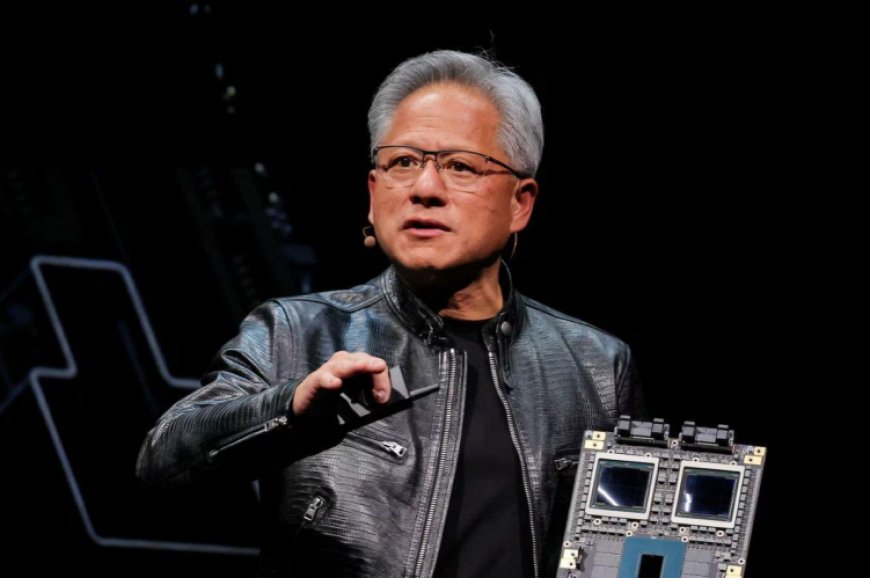
Nvidia on Monday unveiled Alpamayo, a new artificial intelligence platform designed to bring human-like reasoning capabilities to self-driving vehicles, as the company deepens its push into advanced autonomous driving systems. The announcement was made by Nvidia’s chief executive Jensen Huang during a keynote address at the annual CES technology conference in Las Vegas, one of the world’s largest showcases for consumer and industrial technology.
Describing Alpamayo as a major shift in how autonomous vehicles process information, Huang said the platform is built to help cars think through complex and rare driving scenarios, rather than simply react to sensor inputs. “Alpamayo brings reasoning to autonomous vehicles, allowing them to think through rare scenarios, drive safely in complex environments, and explain their driving decisions,” Huang said on stage, underscoring the system’s ability to combine perception, planning and decision-making into a single framework.
According to Nvidia, the technology has been developed to operate across its automotive computing platforms, allowing carmakers to simulate, train and deploy advanced autonomous systems within a unified ecosystem. The company positioned the launch as a foundational upgrade rather than a single product release, arguing that reasoning-based AI will be critical as the industry moves toward higher levels of vehicle autonomy.
A Shift from Reaction to Reasoning
For years, the autonomous driving sector has focused on improving how vehicles see the world using cameras, radar and lidar to detect lanes, vehicles and obstacles. Nvidia’s latest push aims to address what happens next: how a vehicle thinks about what it sees.
The reasoning AI model is designed to interpret complex driving situations holistically, such as merging in congested traffic, negotiating unprotected turns or responding to ambiguous road signals. Instead of treating each decision as an isolated event, the system builds a structured understanding of the driving environment, factoring in intent, timing and possible future outcomes.
Nvidia says this allows the vehicle to choose actions that are not only technically safe, but also socially acceptable and predictable to other road users, a long-standing challenge in autonomous driving.
The company emphasised that the technology is trained using a combination of real-world driving data and large-scale simulation, enabling it to learn from rare or dangerous scenarios that are difficult to capture consistently on public roads. This approach, Nvidia argues, accelerates development while improving safety margins.
Jensen Huang on the Future of Autonomy
Announcing the technology, Huang said the future of self-driving cars depends on AI systems that can reason, not just recognise. “Autonomous vehicles must be able to understand the world, think through complex situations and act safely in real time,” he said.
“Reasoning AI allows vehicles to move from simple perception to true decision-making, bringing us closer to human-level driving intelligence,” Huang added.
Huang described the development as a necessary step for scaling autonomy beyond controlled environments. “Driving is not just about detecting objects it’s about understanding intent, predicting what might happen next and choosing the best course of action,” he said, noting that reasoning-based models enable vehicles to handle edge cases that have historically slowed the deployment of fully autonomous systems.
He also highlighted Nvidia’s broader strategy of building a full-stack automotive AI platform. “By unifying training, simulation and deployment, we’re giving automakers and developers the tools to build safer, more intelligent autonomous vehicles faster than ever before,” Huang noted.
Industry Implications
Nvidia’s announcement comes at a time when the self-driving industry is recalibrating expectations. While early optimism around rapid deployment of fully autonomous cars has faded, investment has increasingly shifted toward incremental intelligence improvements that enhance safety and reliability.
Reasoning-based AI aligns with this trend, offering a pathway to more capable systems without requiring a sudden leap to full autonomy.
For automakers, the technology could reduce reliance on rigid rule-based programming, allowing vehicles to adapt more flexibly to regional driving behaviours and evolving road conditions. For regulators and safety authorities, reasoning AI may also offer clearer frameworks for validating how autonomous systems make decisions, a key requirement for wider approval.
Nvidia positioned the technology as compatible with multiple autonomy levels, meaning it could enhance advanced driver-assistance systems today while laying groundwork for fully autonomous vehicles in the future. This dual applicability is likely to appeal to carmakers navigating uncertain timelines for regulatory acceptance.
Looking Ahead
Looking forward, Nvidia’s reasoning AI points to a future where autonomous vehicles are judged not only on how accurately they detect objects, but on how well they think. The company indicated that ongoing development will focus on expanding reasoning capabilities, improving transparency in decision-making and refining safety validation through simulation at scale.
While fully autonomous vehicles remain a long-term goal, Nvidia’s latest move suggests the next phase of progress will be defined by intelligence depth rather than headline autonomy claims. If reasoning-based AI performs as promised, it could become a cornerstone technology gradually reshaping how self-driving systems are built, tested and trusted on roads worldwide.