





























Davos 2026 Opens as World Leaders Gather to Confront Geoeconomic Tensions
Davos 2026 opens with global leaders, CEOs and institutions focusing on geoeconomic tensions, AI governance, climate action and global cooperation.

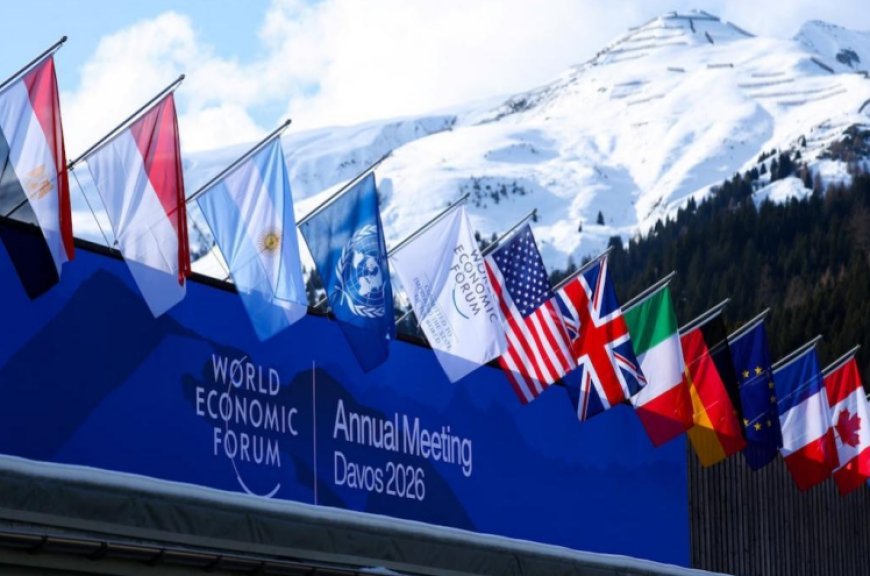
The World Economic Forum’s Annual Meeting 2026 opened on January 19 in Davos, Switzerland, with a scale and urgency that reflected the complexity of the current global landscape. With political temperatures rising across continents, technology reshaping societies at breakneck speed, and economic uncertainty feeding public anxiety, this year’s theme, “A Spirit of Dialogue,” set the tone for a gathering focused less on speeches and more on problem-solving.
The snowy Swiss resort once again became the world’s diplomatic crossroads as national leaders, CEOs, strategists, academics and civil-society figures assembled to outline how governments and businesses plan to navigate a turbulent year ahead.
An Influential Gathering of Leaders and Institutions
Davos 2026 brought together one of the broadest leadership coalitions in recent memory. Heads of state from major global blocs, foreign ministers from key regional players, central bank chiefs, and the heads of international institutions including global financial, humanitarian and trade bodies convened for tightly packed dialogues.
On the economic front, chief executives from global finance, energy, technology, automotive, retail, logistics and healthcare were present in unusually high numbers. Several newly emerging technology giants — particularly in artificial intelligence, quantum computing, biotechnology and green energy — also appeared prominently, reflecting shifting dynamics in global industry.
This mix of participants created an environment where political disagreements, market pressures and innovation strategies intersected, turning Davos into a live negotiation table for issues that span borders and industries.
The Major Issues Dominating Davos 2026
Geoeconomic fractures dominated the early agenda. Leaders discussed rising trade tensions, shifting power alignments, currency volatility and a growing tendency among major economies to prioritise national security over open-market cooperation. Concerns about tariff escalations, resource dependencies and disruptions in strategic supply chains featured heavily in both public and closed-door sessions.
Artificial intelligence governance emerged as a second pillar of discussion. Executives and policymakers focused on developing responsible AI frameworks, managing algorithmic risks, securing data flows and addressing labour-market disruptions. Governments highlighted the need for shared global standards, while businesses emphasised the importance of innovation-friendly regulation that does not slow technological progress.
Climate responsibility and energy transition continued to draw attention, but with a more urgent tone than in previous years. Delegates debated financing for climate resilience, a coordinated shift to clean energy, adaptation strategies for water-stressed regions and the growing economic burden of extreme weather events on developing economies.
Global development and food security re-entered the spotlight as humanitarian organisations warned of vulnerable populations facing rising costs, disrupted agricultural patterns and widening inequality. Davos sessions examined how international cooperation, investment and technology can help repair fragile systems and create more resilient supply chains.
Across these discussions, one theme resonated strongly: global challenges are increasingly interconnected, and no single country or sector can navigate them in isolation.
Business Sentiment and Market Signals
Beyond policy debates, Davos 2026 offered a clear window into global business confidence as companies assessed economic risks and growth opportunities. Corporate leaders across sectors — from finance and manufacturing to technology, mobility and energy — signalled cautious optimism mixed with strategic recalibration.
Many firms reported renewed investment momentum in areas such as digital infrastructure, AI-driven automation, clean energy projects and advanced supply chains, while maintaining a sharper focus on risk management.
Executives highlighted three dominant pressures shaping business strategy this year: rising operational costs driven by geopolitical uncertainty, the need to harden supply chains against disruption, and accelerating investor expectations on sustainability performance. In private CEO roundtables, leaders acknowledged that geopolitical alignment is now a core factor in commercial planning, influencing sourcing, production and capital deployment decisions.
Announcements, Initiatives and Strategic Alignments
Although Davos is not a negotiating body, several governments and corporations used the early days of the meeting to announce new initiatives. Countries outlined plans for economic reforms, technology investments and sustainability targets, signalling a willingness to adopt long-term strategies beyond political cycles.
Leaders expressed interest in coordinated technology governance, including frameworks for AI safety, digital infrastructure reliability, cyber cooperation and responsible data use. The private sector announced collaborations in renewable energy, electric mobility and advanced manufacturing, alongside cross-border investment plans and partnerships aimed at strengthening supply chains against geopolitical instability.
Investment leaders emphasised renewed appetite for climate-aligned financing, particularly in water management, energy storage, decarbonised transport and green industrial policy.
Though varied in scope, these announcements converged on a shared message: the global economy is entering a phase where resilience, sustainability and digital capacity will define competitiveness.
The Road Ahead
As Davos 2026 moves toward its conclusion on January 23, expectations are building around the follow-up actions that governments and corporations will carry into the year. Delegates leave with preliminary understandings on trade cooperation, AI governance priorities, climate investment strategies and digital security that will shape policymaking far beyond the Alpine venue.
The significance of Davos this year lies not in lofty declarations, but in the recognition that dialogue itself has become a global necessity. With trust strained, economies shifting and technology rewriting the rules of competition, Davos 2026 stands as a reminder that coordinated action remains possible, even in an era defined by growing fragmentation.