

































Global Focus on Ocean Protection as Nations Unite to Safeguard Marine Life
Global efforts to protect the world's oceans are gaining momentum as nations address plastic pollution, climate change, overfishing, and marine conservation to safeguard the future of our planet.

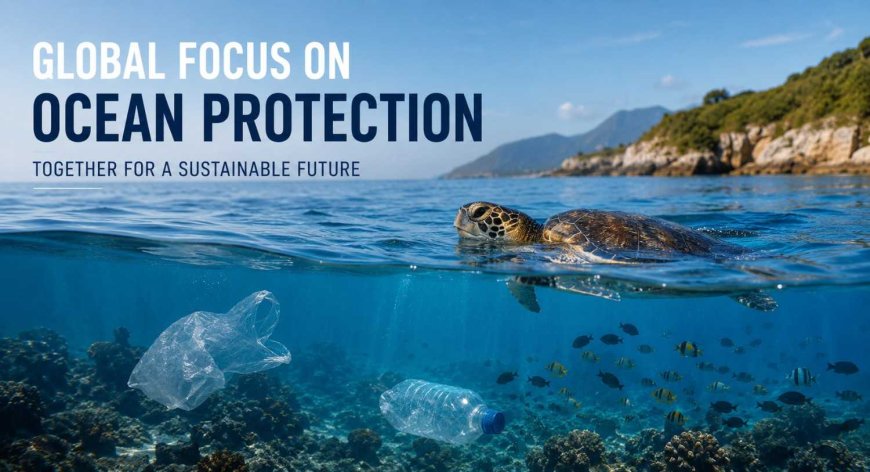
The world's oceans continue being a subject of global discussion as governments, environmental organizations, researchers, and corporate leaders put all their efforts into preserving them. Accounting for over 70 percent of Earth's surface, oceans are important both for climate regulation, biodiversity conservation, and food security for millions of people around the globe. Unfortunately, environmental challenges make protecting oceans one of the most acute problems humanity needs to address.
Across the world, political leaders understand that in order to save marine life, people need to start caring about oceans as well. Oceans face multiple threats, such as rising temperature levels, plastic pollution, overfishing, habitat loss, and climate change. As knowledge grows, the international community starts to work together to find ways to preserve oceans by using sustainable practices.
One of the most serious environmental challenges for oceans is plastic pollution. Millions of tons of plastic get into the ocean through rivers, coastlines, and other sources annually. The negative effects of plastic pollution include harm to marine organisms, ecosystem damage, and even poisoning humans via seafood. That is why environmental organizations ask for stricter control over plastic production, recycling programs, and public awareness.
Oceanic regions are also faced with problems caused by climate change. Global warming has made the sea water warmer, causing various issues like coral reef bleaching and changing of fish populations' locations. Coral reefs, or rainforests of the sea, have been identified as the most vulnerable marine environment because they are home to numerous marine species and contribute economically as tourist destinations and commercial fishing spots.
The other problem affecting the health of the oceans is overfishing. The fish population in some marine areas around the globe has depleted faster than the time taken by the reproduction process to replenish. The problem of overfishing poses not only a threat to biodiversity in the affected areas but also affects communities that make a living from fishing activities. Sustainable fishing campaigns have gained popularity globally and the formation of marine parks.
Marine protected areas refer to those zones within the seas where some human activities such as fishing are prohibited, therefore giving room for nature to rejuvenate itself. The importance of marine protected areas cannot be overlooked because they increase biodiversity and fish populations.
Countries across the world are increasing the size of their marine conservation zones as part of their general conservation programs.
In addition to the use of new technology for better communication and information, other technologies have been created specifically for conservation. Satellites, artificial intelligence, submarines, and other innovative solutions are used by scientists today for the effective monitoring of marine areas. With their help, one can track any illegal activity, identify sources of contamination, and collect important information.
Companies are also participating in various sustainable development projects. Enterprises related to such activities as shipping, tourism, fishing, manufacturing, and many others face pressure from consumers who want their companies to be engaged in ecological business. In response, many businesses invest in the production of eco-friendly products, reduce their harmful impact on the environment, and conduct various conservations programs.
At the same time, we must not forget about the economic value of the seas and oceans. The sea and oceans are responsible for international trade, tourism, fishing and fishery development, the implementation of various renewable energy projects, and many other industries worth trillions of dollars per year.
As international collaboration advances, experts feel optimistic that progress will be made. Despite the difficulties that are involved, the greater emphasis placed on marine protection indicates that it is widely understood how important the state of the oceans is for the health of our planet. In this way, we have an opportunity to work together to protect this precious natural resource.