

































Global AI Leaders Gather at Cisco AI Summit 2026 to Shape the Future of Artificial Intelligence
Global policymakers, tech leaders and researchers convene at Cisco AI Summit 2026 to discuss AI governance, infrastructure, ethics and enterprise-scale adoption.

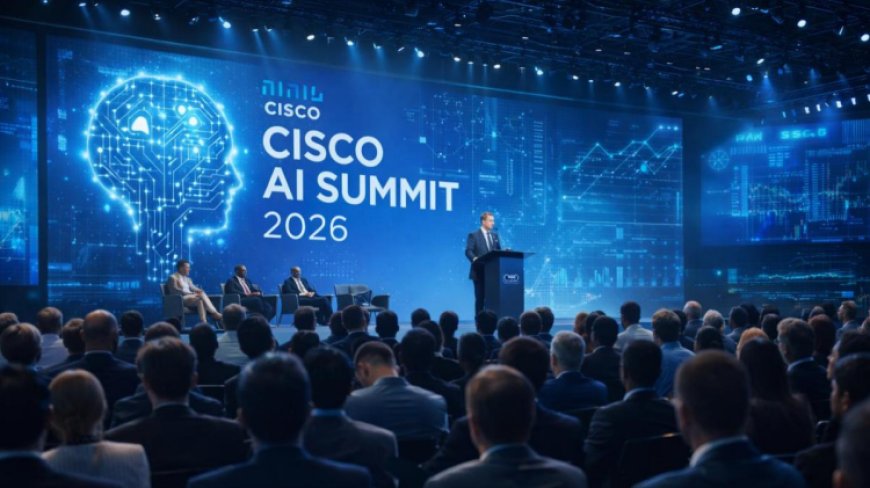
The global technology community has turned its attention to the Cisco AI Summit 2026, which opened today at the company’s headquarters in Silicon Valley, bringing together some of the world’s most influential voices in artificial intelligence, enterprise computing, data science, robotics and digital infrastructure.
The three-day summit, scheduled from February 1 to 3, is being positioned as one of the most consequential global gatherings on AI, reflecting the accelerating pace of innovation and the deep transformation unfolding across industries worldwide.
With participation from government leaders, Fortune 500 executives, academic researchers, AI governance councils, venture investors and chief technology officers, the summit focuses on the future direction of large-scale AI deployment. Sessions are dedicated to the economics of enterprise-level automation, AI governance models, cross-border regulatory alignment, cloud-to-edge infrastructure, cybersecurity in the age of autonomous systems, and the societal implications of AI on future labour markets.
Cisco executives described the summit as “a defining moment for the global AI ecosystem,” signalling a transition from experimental adoption to broad-scale operational integration across sectors.
A Global Convergence of AI Policymakers, Researchers and Enterprise Leaders
The opening day of the summit saw keynote addresses from leading figures in government and technology, including senior executives from Cisco’s AI division, representatives from the United Nations’ AI Advisory Board, and directors from major research universities such as MIT and Stanford University.
Discussions emphasised the rapid acceleration of AI adoption across major economies and the need for harmonised global standards. A senior member of the UN’s AI Governance Taskforce highlighted that more than 70 countries are actively developing national AI frameworks, with global AI spending projected to exceed USD 900 billion annually by 2030.
The speaker noted that cross-border cooperation will be essential to managing risk, ensuring fair access to technology, and addressing ethical challenges tied to AI’s growth.
Cisco leadership underscored the company’s commitment to advancing responsible AI. The event’s opening keynote by Cisco’s Chief Strategy Officer stressed that “AI is no longer an emerging technology; it is the foundation of modern digital transformation. The challenge now is ensuring that this transformation is ethical, scalable and beneficial across industries.”
The tone set by the summit’s opening session made clear that the industry’s next phase will be shaped by collaboration between public institutions, private enterprises and research communities.
Themes and Agendas
One of the central themes dominating the summit is the infrastructure required to support AI at global scale. Cisco, which has invested heavily in AI-optimised networking, cloud systems and security architecture, detailed new projections that enterprise AI workloads are expected to grow more than 4.5 times between 2026 and 2030.
This surge will require unprecedented bandwidth expansion, edge computing deployments and next-generation data centre designs capable of supporting high-density compute clusters.
Technology leaders emphasised the massive infrastructural shift required to support global AI adoption. As enterprises move toward deploying multimodal AI systems, real-time analytics and autonomous process engines, the burden on global digital networks has increased significantly.
Cisco engineers presented new research estimating that more than 27% of global internet traffic will be driven by AI-to-AI communication by the end of the decade.
Industry observers noted that this shift marks the early stages of an infrastructural revolution. Organisations are expected to move decisively toward AI-ready architecture, including AI-native networks, liquid-cooled data centres, hardware-accelerated cloud stacks and integrated cybersecurity frameworks.
Summit participants stressed that enterprises with slow AI infrastructure adoption risk falling behind global competitors who are already scaling intelligent automation capabilities.
AI Governance, Regulation and Ethical Frameworks
A key highlight of the summit is its focus on AI governance and accountability. Panels featuring legal experts, global regulators and ethicists examined the urgent need for clear, enforceable frameworks to ensure safe AI deployment.
Speakers acknowledged that AI advancement is occurring faster than regulatory systems can adapt, with several countries struggling to create robust oversight structures.
A representative from the European Union’s AI Policy Directorate emphasised that the speed of AI adoption demands strong regulatory alignment, warning that unregulated AI poses risks to security, privacy and economic stability.
This sentiment was echoed by delegates from Asia and the Middle East, who stressed that global interoperability is now an economic necessity.
Cisco’s Vice President for Responsible Innovation stated that designing ethical AI must become standard practice, not an afterthought. He highlighted Cisco’s ongoing work on fairness testing, transparent model reporting and cross-border safety guidelines.
Researchers also discussed the long-term social implications of autonomous systems, including labour displacement, algorithmic bias and the future of digital rights.
Breakthrough Technologies, Industry Demonstrations and Innovation Showcase
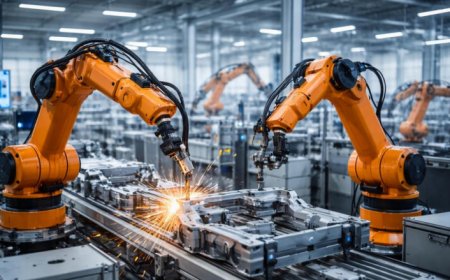
The Cisco AI Summit 2026 also features a large-scale demonstration zone where companies unveil cutting-edge advancements spanning neural-network engineering, robotics, multimodal AI, edge computing and cybersecurity automation.
Industry leaders showcased developments in generative AI for industrial automation, advanced language systems, AI-driven supply chain analytics and real-time fraud-detection engines.
Startups presented next-generation applications designed for healthcare, automotive safety, climate modelling and high-frequency finance, highlighting AI’s expanding influence across global industries.
Technologists from major cloud partners demonstrated new AI-optimised networking solutions capable of handling extremely high throughput while maintaining energy efficiency, addressing concerns over the growing carbon footprint of global computing infrastructure.
Executives attending the demonstrations noted that the event illustrates how quickly AI research is converting into enterprise-grade solutions. Several companies previewed prototypes of autonomous decision engines expected to be integrated into consumer technologies, national infrastructure and corporate operations over the next three to five years.
Industry Outlook
As the summit continues, discussions have focused on the future of global workforces and the economic implications of widespread AI adoption.
Analysts from leading think tanks presented new data showing that AI is expected to contribute USD 7–10 trillion to the global economy by 2032, with productivity gains concentrated in manufacturing, healthcare, logistics, finance and digital services.
However, these gains will be accompanied by large-scale reskilling requirements as AI automates more operational tasks.
Cisco executives stressed that the next decade will redefine labour structures, arguing that workforce transformation must occur at the same pace as technological innovation. Education leaders and corporate training specialists participating in the summit agreed that reskilling initiatives in digital literacy, automation management and AI-supported decision-making will need to accelerate.
The economic outlook presented at the summit suggests that AI’s long-term impact will extend far beyond technology sectors, influencing global competitiveness, geopolitical alignment and national development strategies.
Delegates emphasised that early adopters of enterprise-scale AI will hold substantial advantages in efficiency, cost reduction and innovation capacity.
Conclusion
The Cisco AI Summit 2026 stands as one of the most important global gatherings for artificial intelligence this year, marking a pivotal moment in the shift from experimental AI to large-scale implementation across industries.
With its high-level discussions, multi-sector participation and forward-looking demonstrations, the summit underscores the extraordinary pace of global AI evolution.
As the event continues through February 3, it is already shaping global dialogues around AI governance, infrastructure readiness and enterprise transformation. With leaders from governments, corporations and research institutions aligned on the need for collaborative action, the summit is poised to influence AI strategies, regulatory frameworks and technological priorities worldwide in the years ahead.