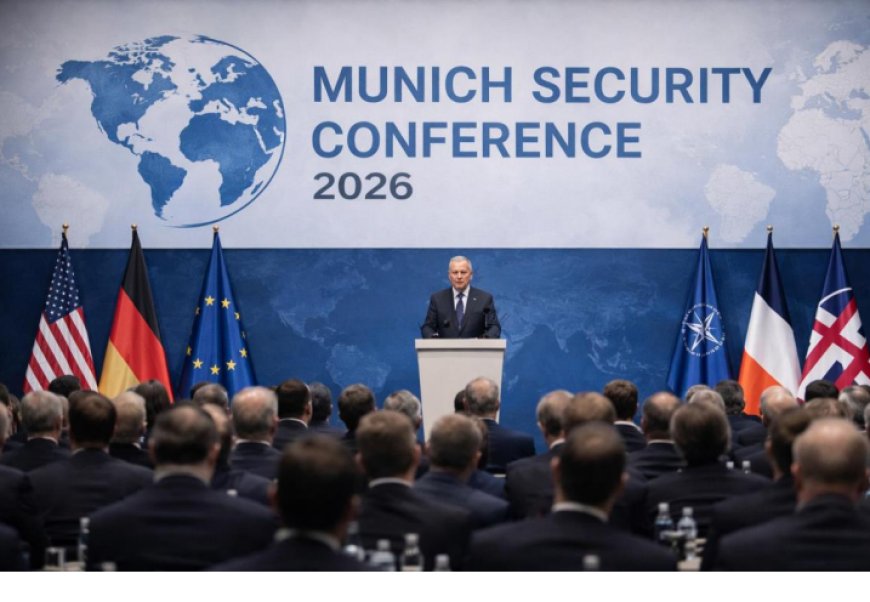
With the Munich Security Conference set to take place from 13–15 February 2026, diplomatic momentum has intensified as world leaders prepare to navigate one of the most complex global security landscapes in recent years. Discussions this week have focused on deteriorating geopolitical alignments, cyber-threat escalation, renewed strategic competition, and the future of collective defence systems. Officials from Europe, the United States, and partner nations are arriving in Munich with pre-summit statements signalling strong realignments and shifting priorities in international security policy.
The North Atlantic Treaty Organisation (NATO) remains at the centre of the dialogue after the United States reaffirmed its defence commitments to the alliance. This reassurance follows months of debate over Europe’s strategic autonomy, resource allocation, and shared defence responsibilities, particularly in light of continuing tensions involving Russia, eastern Europe, and global cyber-operations.
US Positioning: Reaffirmation of NATO and Strategic Coordination
Senior US officials confirmed today that Washington remains committed to fulfilling Article 5 obligations, emphasising that transatlantic security remains “non-negotiable.” This announcement followed internal reviews assessing the stability of Eastern Europe and ongoing military support commitments across multiple theatres. Officials highlighted that strengthening NATO deterrence is a top priority going into the conference.
In Washington, analysts noted that the reaffirmation was partly motivated by concerns over vulnerabilities exposed in recent cyber incidents and intelligence assessments. According to briefings, US diplomats plan to use the Munich platform to push for expanded cooperation on cyber-response systems, unified intelligence sharing, and coordinated counter-disinformation operations. The US position is expected to influence discussions on shared military readiness and long-term defence sustainability.
European Strategic Autonomy Debate Intensifies
Across Europe, national governments and defence ministries are preparing position papers addressing calls for increased defence independence. France and Germany have reiterated their support for a stronger European security framework, arguing that Europe must enhance its defence capabilities to complement, rather than replace, transatlantic cooperation. Pre-summit statements from Paris outlined concerns about over-dependence on external power blocs.
European analysts believe the debate around autonomy will be a dominant theme at Munich. With rising pressure on energy security, migration patterns, and global supply chain disruptions, several EU member states are expected to argue for accelerated joint defence procurement, improved military mobility, and upgraded rapid-deployment frameworks. Negotiators have indicated that internal disagreements within Europe are likely to surface but will be framed around long-term strategic planning.
Escalating Cyber Threats Push Global Coordination to the Forefront
Cybersecurity officials across the US, EU, and Asia have expressed concern over increasing cyber intrusions targeting critical infrastructure, financial networks, and government communication systems. Intelligence sources report that state-linked actors have significantly increased their probing of defence and transport networks since late 2025, driving urgency for a coordinated international response.
Ahead of the Munich Conference, diplomats are drafting proposals for expanded cyber-readiness assessments and shared response frameworks. Key recommendations include real-time intelligence exchange, AI-enabled threat detection across cooperating nations, and joint cyber-exercises to simulate multi-vector attacks. Officials underscore that cyber threats have become as destabilising as traditional military risks, requiring collective action at unprecedented speed and scale.
Defence Cooperation and Funding Commitments Under Review
NATO member states and partner countries are preparing to present defence-spending updates, with several governments expected to outline new funding models for joint operations, weapons modernisation, and integrated command structures. Early disclosures indicate that multiple European countries will announce increased budget allocations aligned with rising threat levels and new readiness benchmarks.
Military coordinators have emphasised the need for flexible coordination frameworks capable of supporting rapid deployments and humanitarian missions. The shift also includes investment in emerging technologies such as unmanned defence systems, early-warning satellite systems, and advanced battlefield communication networks. Delegates anticipate intense negotiation over funding responsibilities and strategic distribution of resources among alliance members.
Geopolitical Stability Concerns Surround Russia and Eastern Europe
Tensions involving Russia remain a central concern ahead of Munich. European diplomats have warned that recent escalations along border regions demonstrate the need for renewed deterrence measures and diplomatic channels to manage unintended conflict risks. Expanded monitoring and intelligence coordination are expected to be key discussion points at the conference.
Simultaneously, Eastern European states are preparing to push for stronger security guarantees. Leaders from these nations emphasised that peace cannot be guaranteed without sustained global engagement and unified defence commitments. Diplomatic advisors expect the Munich discussions to reinforce Europe’s stance on border stability, regional sovereignty, and crisis-preparedness measures for 2026–27.
Conclusion
As global power structures continue to shift, the upcoming Munich Security Conference stands as a crucial event where the world’s leading governments will define the contours of defence cooperation, cybersecurity policies, and geopolitical strategy for the coming decade. With heightened tensions across multiple regions, today’s pre-summit statements underscore the urgency of building resilient security alliances.
With US commitments reaffirmed, European strategies under review, and widespread alarms over cyber threats, the Munich Conference is expected to formalise a new chapter in international security policy. Whether these discussions lead to meaningful action will shape global defence equilibrium and geopolitical stability throughout 2026 and beyond.